Heat Blisters, Curling Shingles, and What They’re Trying to Tell You
Jump to a section:
Living in Raleigh means dealing with humidity that feels like a warm blanket you can’t shake off. We know the drill: June hits, the air gets heavy, and we retreat to our air-conditioned sanctuaries. But while we cool down inside, our roofs are baking outside. They take the brunt of that Carolina sun, day in and day out. Over time, your shingles start to show signs of stress, much like we do after a long week. You might notice odd bumps or edges that turn up like stale potato chips. These aren’t just cosmetic quirks. They are your roof’s way of asking for help.
In Raleigh and the surrounding towns, we see a specific pattern of roof aging that sets our area apart from cooler climates. The combination of high UV exposure and intense moisture creates a tough environment for asphalt shingles. We see roofs that should last 25 years failing at 15 because the attic ventilation wasn’t calibrated for our humid summers. It is common to drive through established neighborhoods inside the Beltline and spot roofs that look exhausted. They are fighting a battle against thermal shock—rapid expansion during the day and contraction at night. This isn’t just about old roofs; even newer installs can suffer if the materials weren’t handled right or if the ventilation is off-balance.
The Science of Heat Blisters: Not Just a Cosmetic Issue
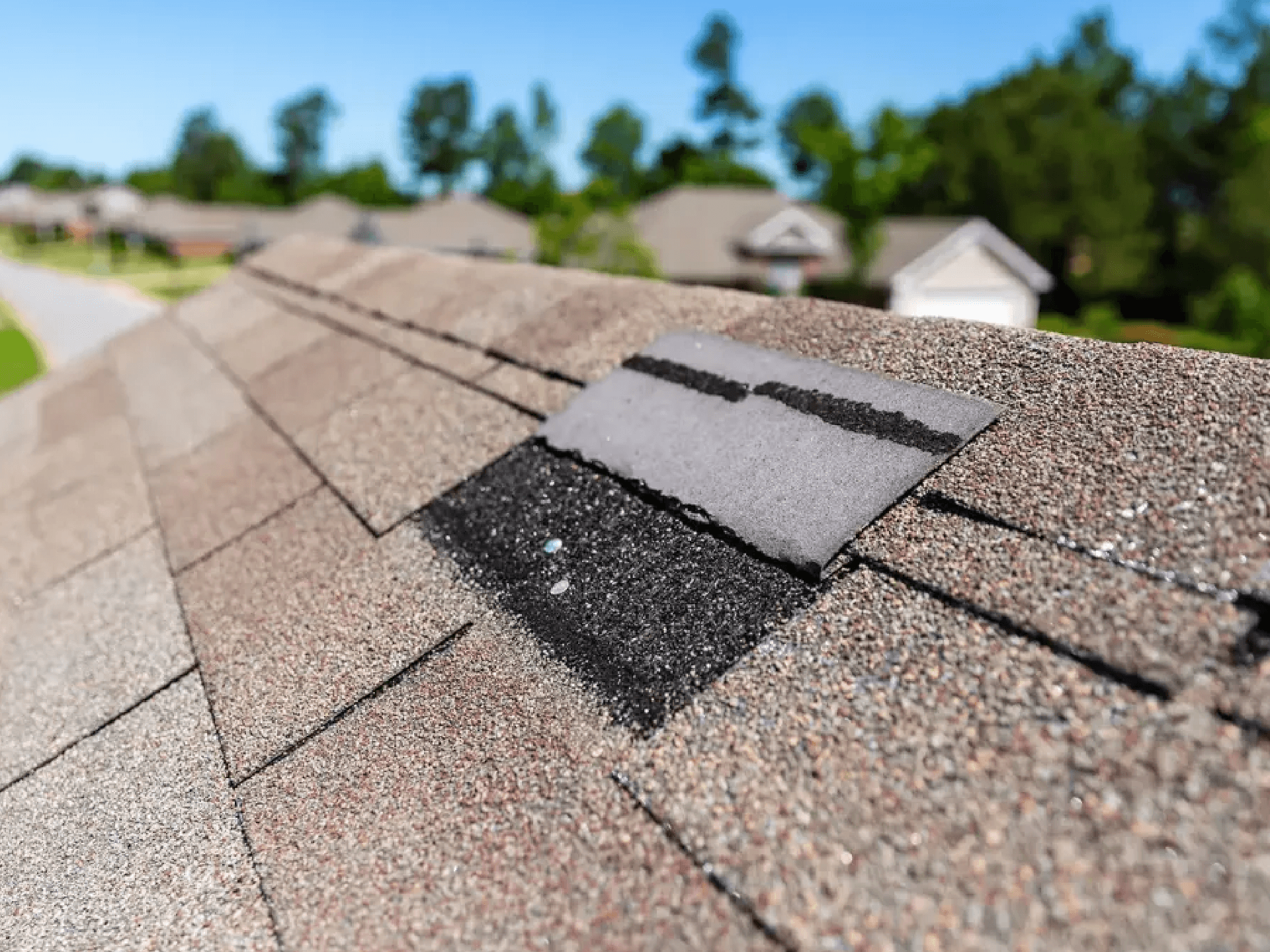
You might look up and see small, raised bumps on your shingles. They look a bit like hail damage, but if you look closer, they are different. These are heat blisters. They happen when moisture gets trapped inside the shingle itself. This can occur during the manufacturing process, or sometimes if the shingles were installed on a wet day. Once the sun heats that trapped moisture, it turns into gas. That gas expands and has nowhere to go, so it pushes the asphalt up, creating a bubble.
Over time, these bubbles pop. When they do, they leave a small crater that exposes the matting underneath. This removes the protective granules that shield your roof from the sun. Once those granules are gone, the sun eats away at the asphalt rapidly. It is a slow-motion failure that often gets misdiagnosed. Many homeowners confuse this with hail impacts, but the distinction matters for insurance and repair purposes.
The Skybird Roofing Team believes that misdiagnosing a blister as hail damage is one of the most common errors in our industry. Blisters are about internal pressure, while hail is about external force. Knowing the difference protects the homeowner from filing a claim that might get denied.
To help you spot the difference, we broke down the visual cues that separate these two common problems.
Comparison: Heat Blisters vs. Hail Damage
| Feature | Heat Blisters | Hail Damage |
|---|---|---|
| Shape | Raised, bubble-like protrusion | Indented, concave depression |
| Texture | Often has a steep, rigid edge | Soft to the touch, “bruised” feel |
| Granule Loss | Granules fall off after the blister pops | Granules crushed into the mat or missing immediately |
| Pattern | Scattered randomly or in high-heat areas | Found on slopes facing the storm direction |
If you see these pockmarks, do not ignore them. A popped blister is a weak point. Water can eventually seep through that tiny crater and reach the decking below. It might not leak today, but it is a ticking clock.
Why Shingles Curl: The “Potato Chip” Effect
Curling shingles are easier to spot from the ground. They give your roof a textured, unkempt look. But this isn’t just about curb appeal. A flat shingle seals out water; a curled shingle invites it in. Wind can catch the edge of a curled shingle and rip it right off during a storm. There are two main ways shingles distort, and each points to a different root cause.
First, we have “cupping.” This looks exactly like it sounds—the edges of the shingle turn upward, forming a cup shape. The center of the shingle stays flat or dips slightly. This usually signals a moisture problem from below. If your attic is trapping wet air, the underside of the shingle absorbs it and expands, while the top side stays dry and contracted in the sun. This uneven expansion forces the edges up.
Then there is “clawing.” In this scenario, the center of the shingle bulges up while the edges stay flat or dig down. It looks like a cat scratching a post. This is often a sign of extreme heat aging the shingle prematurely. The top layer shrinks as it dries out, pulling the material into that claw shape. Both situations mean the shingle has lost its flexibility. It is now brittle and prone to breaking.
Common Culprits Behind Curling
- Natural Aging and Granule Loss Asphalt shingles have a lifespan. As they near the end, the oils that keep them flexible dry out. The shingle shrinks, causing it to pull apart from its fiberglass mat. This is the most natural cause, but it means roof replacement is on the horizon.
- Improper Nailing Techniques If a roofer places nails too high on the shingle or doesn’t use enough of them, the shingle can move. Over time, this lack of security allows the material to warp. We see this often on DIY jobs or work done by inexperienced crews.
- Defective Product Lines Sometimes, the materials themselves are to blame. There have been periods where specific batches of shingles from major manufacturers were prone to early failure. If your neighbors with homes built in the same year are seeing the same thing, it might be a batch issue.
At Skybird Roofing, we often tell clients that a curled shingle is like a dried leaf. It might stay in place for a while, but the moment a strong wind comes along, it will shatter or fly away. Flexibility is the key to a roof’s survival.
The Raleigh Factor: Humidity and Heat
We cannot talk about roof failure without talking about where we live. Raleigh sits in a sweet spot for roof damage. We get the intense heat of the South mixed with heavy moisture from the Atlantic. This creates a specific atmospheric load on your home. In the summer, our average high temperatures hover in the low 90s. But on a roof, that translates to surface temperatures of 150 degrees or more. That is hot enough to fry an egg, and certainly hot enough to boil the volatile oils out of asphalt.
The humidity is the silent partner in this crime. With average humidity levels often sitting between 70% and 75% during summer mornings, the air is saturated. If that moisture gets into your roof deck, it stays there. Wood acts like a sponge. When the sun hits the roof, it drives that moisture upward into the shingles. This constant cycle of wetting and drying, heating and cooling, accelerates every degradation process we discussed.
Raleigh Climate Stressors on Roofs
| Month | Avg. High Temp (°F) | Avg. Humidity (%) | Est. Roof Surface Temp (°F) |
|---|---|---|---|
| June | 86°F | 70% | 135°F – 145°F |
| July | 90°F | 74% | 150°F – 160°F |
| August | 88°F | 75% | 145°F – 155°F |
This data shows why we emphasize local knowledge. A roof that works in dry Arizona might fail here because it can’t handle the moisture load. A roof that works in cooler New England might fail here because it can’t handle the thermal shock. You need materials and installation methods designed for this specific humid subtropical climate.
Ventilation: The Silent Culprit
If there is one thing we wish every homeowner understood, it is the role of attic ventilation. Most people think ventilation is just about keeping the house cool to save on AC bills. While that is true, its primary job is to protect the roof deck and shingles. Your attic needs to breathe. It needs to intake fresh, cooler air from the soffits (the underside of your eaves) and exhaust hot, stale air out the top through ridge vents or box vents.
When this system is blocked or unbalanced, your attic becomes a furnace. We have measured attic temperatures in Raleigh that exceeded 160 degrees. That heat does not just stay in the air; it radiates right back into the wood decking and the bottom of your shingles. You are literally cooking your roof from both sides—the sun from above and the attic heat from below. This is the number one cause of the blisters and cupping we mentioned earlier.
The Skybird Roofing Team sees ventilation as the lungs of the home. If the house can’t breathe, the roof suffocates. We fix the intake and exhaust balance just as often as we fix the shingles themselves, because without airflow, the new roof will fail just as fast as the old one.
Many older homes in our area have insulation blocking the soffit vents. This chokes off the airflow. Even if you have a great ridge vent, it can’t work without intake. It is like trying to suck a milkshake through a collapsed straw. Nothing moves. Fixing this is often a matter of installing baffles to keep the insulation back and ensure a clear path for air to enter. It is a small adjustment that adds years to your roof’s life.
Inspection and Prevention
So, what should you do? You don’t need to climb up a ladder to do a basic check. In fact, we advise against it for safety reasons. You can see a lot from the ground with a pair of binoculars. Walk around the perimeter of your house. Look at the slopes that get the most sun—usually the south and west-facing sides. These are the areas that will fail first.
Look for the texture changes we described. Is the roof looking smooth and uniform, or does it look rough and lifted? Check the gutters for excessive granules. Finding a handful of granules after a heavy rain is normal for a new roof, but if your roof is 10 years old and your gutters are full of black sand, that means your shingles are shedding their skin. That is a major red flag.
Signs You Need a Professional Assessment
- Visible Granule Loss in Gutters If you clean your gutters and find piles of ceramic granules, your shingles are losing their UV protection. This accelerates aging rapidly.
- Dark Spots or Dirty Areas Dark patches can indicate where granules have worn away or where algae is growing. While algae is mostly cosmetic, worn patches are structural vulnerabilities.
- Nail Pops If you see small bumps that look like a nail head pushing up through the shingle, that is a nail pop. It breaks the seal of the shingle and creates a direct path for water to enter the decking.
- Interior Ceiling Stains Brown spots on your ceiling are the final warning. By the time water gets to your drywall, it has already soaked the insulation and the roof deck. Immediate action is needed.
Catching these issues early allows for repairs rather than replacement. We can often replace a few damaged shingles or add a solar fan to improve ventilation. These small interventions can extend the life of the entire system. Ignoring them usually leads to a full tear-off sooner than you planned.
Conclusion
Your roof talks to you through blisters, curls, and granule loss. In Raleigh’s intense climate, these signs appear faster and mean more than they might elsewhere. Heat blisters warn you of trapped moisture, while curling shingles scream about ventilation issues or old age. Ignoring them doesn’t make the problem go away; it just makes the solution more expensive. We want your home to stay dry and secure through every season.
If you spot any of these warning signs or just want peace of mind about the state of your roof, reach out to us. Contact the Skybird Roofing Team if you need help with roofing maintenance or inspection. We are here to help you navigate these challenges and keep your home protected.