Business Roofing Contractor: How to Choose the Right Commercial Roofing Partner: How to Choose the Right Commercial Roofing Partner
Jump to a section:
Selecting a business roofing contractor affects your commercial property for decades to come. The right partner protects your investment, minimizes disruptions to your operations, and delivers a roof that performs under demanding conditions. We created this guide to help you evaluate commercial roofing contractors with confidence, asking the right questions and understanding what separates qualified professionals from the rest.
What Defines a Professional Business Roofing Contractor?
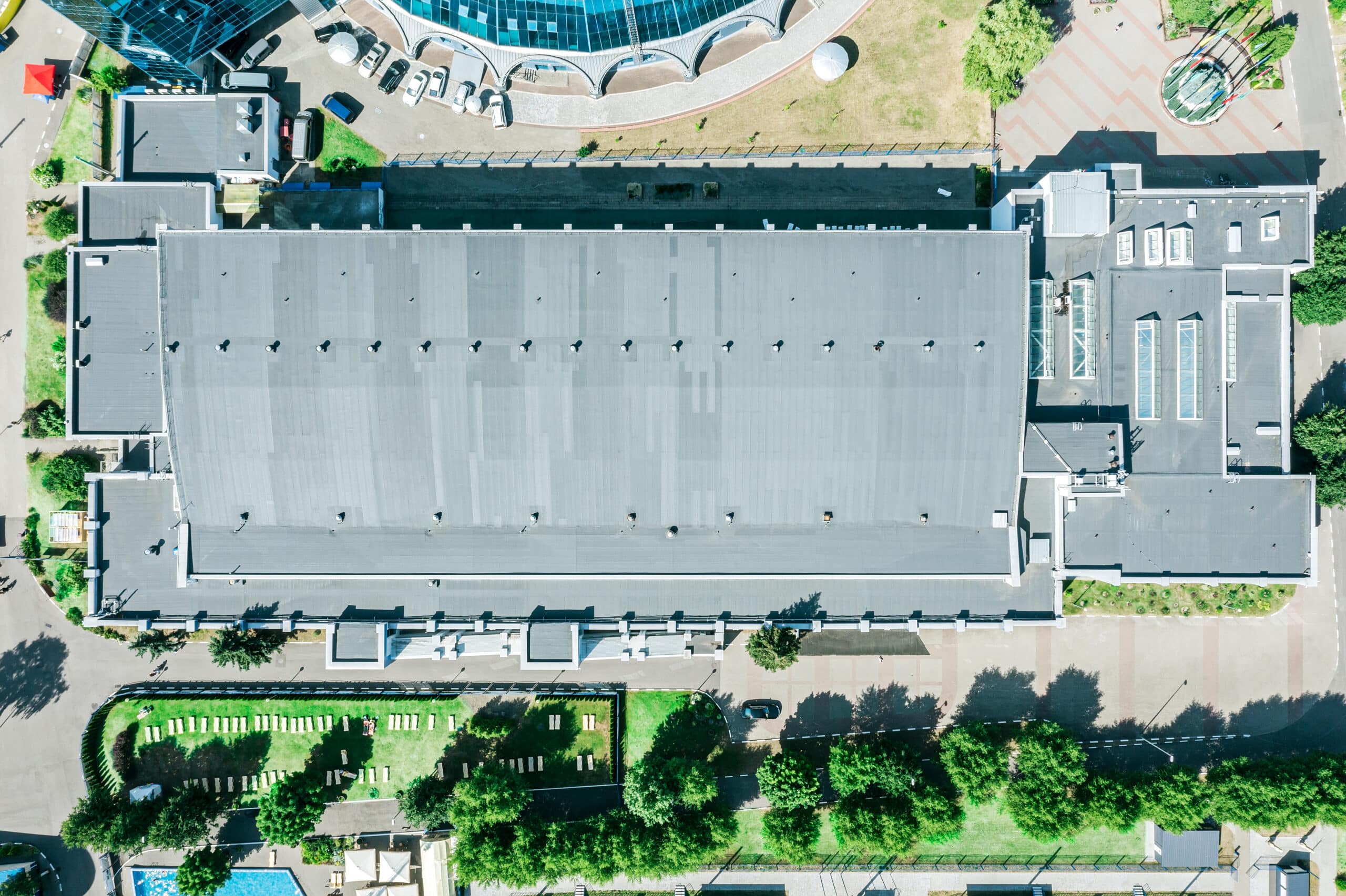
A business roofing contractor specializes in commercial and industrial roofing systems, which differ significantly from residential roofing. Commercial roofs typically feature flat or low-slope designs, cover larger square footage, and require specialized materials like TPO, EPDM, modified bitumen, or built-up roofing systems. A professional commercial roofer understands these systems inside and out, bringing the technical knowledge needed to handle complex installations and repairs.
Commercial projects come with unique challenges that residential roofers rarely encounter. Building codes for commercial structures tend to be stricter, HVAC penetrations require careful waterproofing, and the sheer scale of many projects demands precise project management. When you hire a business roofing contractor, you gain access to crews trained specifically for these environments.
Key differences between commercial and residential roofing contractors:
- Roofing system expertise: Commercial contractors work with flat roof membranes, metal panel systems, and spray-applied coatings that residential contractors rarely install.
- Equipment and crew size: Business roofing projects often require cranes, specialized safety equipment, and larger crews to complete work within tight timelines.
- Code compliance knowledge: Commercial buildings must meet stricter fire codes, wind uplift ratings, and energy efficiency standards that vary by municipality.
- Project coordination: Commercial contractors coordinate with building managers to minimize operational disruptions during installation or repair.
“Property owners sometimes assume any roofing company can handle commercial work, but the technical requirements are completely different. A contractor who excels at shingle roofs may struggle with a 50,000 square foot TPO installation. Always verify commercial-specific experience before signing a contract.” — The Team at Skybird Roofing
What Credentials Should a Licensed Business Roofing Contractor Have?
Licensing and insurance form the foundation of any reputable business roofing contractor. These credentials protect both the property owner and the workers on site, while also indicating that the contractor meets minimum competency standards established by state and local authorities.
North Carolina requires general contractors to hold a license from the NC Licensing Board for General Contractors for projects exceeding $30,000 in value. Most commercial roofing projects fall above this threshold, making licensure a baseline requirement. Verify any potential contractor’s license status through the state’s online database before proceeding with negotiations.
Credentials to verify before hiring a commercial roofing contractor:
| Credential Type | Why It Matters | How to Verify |
|---|---|---|
| State Contractor License | Confirms legal authority to perform commercial work and demonstrates minimum competency | NC Licensing Board online search |
| General Liability Insurance | Protects property owner from damage claims during the project | Request Certificate of Insurance directly from carrier |
| Workers’ Compensation Insurance | Covers worker injuries; without it, property owners may face liability | Request Certificate of Insurance directly from carrier |
| Manufacturer Certifications | Indicates specialized training on specific roofing systems and enables extended warranties | Contact manufacturer or review contractor documentation |
| OSHA Safety Training | Demonstrates commitment to worksite safety and regulatory compliance | Ask for training records and safety program documentation |
Manufacturer certifications deserve particular attention when evaluating commercial roofing contractors. Companies like GAF, Carlisle, and Firestone authorize certain contractors to install their products and offer extended warranties only when certified installers complete the work. A contractor without these certifications may still install the same materials, but you lose access to valuable warranty protections that cover both materials and labor.
How Do You Evaluate a Business Roofing Contractor’s Experience and Reputation?
Experience matters in commercial roofing, but the type of experience matters just as much as the years in business. A contractor who has installed thousands of residential roofs brings limited value to your warehouse roof replacement project. Look for contractors with direct experience on buildings similar to yours in size, function, and roofing system type.
Ask potential contractors for a portfolio of completed commercial projects. Pay attention to the variety of building types they have served, including retail centers, office buildings, manufacturing facilities, and multi-family residential complexes. Each building type presents different challenges, and a contractor with broad experience can adapt to unexpected complications more effectively.
Questions to ask about experience and past projects:
- Project scope history: What is the largest commercial roofing project you have completed, and what challenges did you encounter?
- System-specific experience: How many roofs have you installed using the specific system you’re recommending for my building?
- Reference availability: Can you provide contact information for three property owners with buildings similar to mine?
- Ongoing relationships: Do you have maintenance contracts with any of your past clients, and would they recommend your services?
- Warranty claim history: What percentage of your projects have required warranty repairs within the first five years?
Online reviews provide another window into contractor quality, though you should interpret them carefully. Look for patterns across multiple review platforms rather than fixating on individual comments. A contractor with dozens of five-star reviews and one negative comment likely delivered strong service to most clients. Conversely, consistent complaints about communication failures, timeline delays, or hidden charges signal potential problems.
“We tell property owners to ask contractors about their failures, not just their successes. How a company handles problems reveals more about their professionalism than a portfolio of perfect projects. The best contractors learn from every installation and continuously improve their processes.” — The Team at Skybird Roofing
What Questions Should You Ask Before Hiring a Commercial Roof Contractor?
The pre-hire conversation shapes your entire project experience. Asking detailed questions upfront reveals how a contractor operates, communicates, and handles accountability. Vague or evasive answers during this phase often predict problems during installation.
Start with questions about the roof inspection process. Reliable contractors refuse to provide quotes without first examining your existing roof condition. This inspection should include documentation of current damage, moisture testing if appropriate, and a detailed assessment of underlying decking and insulation. Any contractor willing to quote a major project based solely on aerial photos or square footage estimates lacks the diligence needed for commercial work.
Questions every property owner should ask potential contractors:
- Inspection methodology: Will you perform moisture testing and core samples during your inspection, and what do these tests reveal?
- Written specifications: Will your proposal include detailed written specifications for all materials, including manufacturer names and product numbers?
- Crew composition: Will your own employees perform the installation, or do you subcontract any portion of the work?
- Timeline and scheduling: How long will the project take, and what factors could cause delays beyond the projected completion date?
- Communication protocol: Who will be my primary point of contact, and how quickly can I expect responses to questions or concerns?
- Payment structure: What is your payment schedule, and do you require a deposit before work begins?
The answers to these questions help you compare contractors on equal footing. A contractor who provides detailed written specifications demonstrates transparency and makes it easier to compare quotes accurately. One who relies on subcontractors may offer lower prices but introduces quality control variables outside their direct supervision.
How Should You Compare Commercial Roofing Quotes and Pricing?
Price comparisons in commercial roofing require careful attention to specifications rather than bottom-line numbers. Two quotes for the same building can vary by tens of thousands of dollars based on material quality, warranty terms, and scope of work. The lowest bid rarely represents the best value when you account for these variables.
Request itemized quotes from every contractor you consider. Each quote should separate material costs, labor costs, and any additional charges for permits, dumpster rental, or equipment. This breakdown allows you to identify where price differences originate and ask informed questions about value trade-offs.
Commercial roofing cost factors that affect pricing:
| Cost Factor | How It Affects Price | Questions to Ask |
|---|---|---|
| Roofing System Type | TPO, EPDM, and metal systems carry different material and installation costs | Why do you recommend this system over alternatives? |
| Membrane Thickness | Thicker membranes cost more but often last longer and resist punctures better | What thickness are you specifying, and what is the warranty difference? |
| Insulation R-Value | Higher R-values improve energy efficiency but increase material costs | How did you calculate the recommended insulation level? |
| Tear-Off vs. Overlay | Removing existing roofing adds labor and disposal costs but may be required by code | Is an overlay appropriate for my building, or is tear-off necessary? |
| Warranty Length | Extended manufacturer warranties require certified installation and premium materials | What warranty options are available, and what are the cost differences? |
Warranty terms deserve particular scrutiny during quote comparison. A 20-year manufacturer warranty sounds impressive until you discover it covers only material defects, not labor for repairs. Ask each contractor to explain exactly what the warranty covers, who performs warranty repairs, and what actions might void the coverage. The best contractors offer workmanship warranties alongside manufacturer coverage, creating multiple layers of protection.
“When we review quotes from other contractors with property owners, we often find missing line items that create confusion later. A quote that excludes flashing replacement, for example, might seem cheaper upfront but requires a change order once work begins. Complete specifications protect everyone and build trust between contractor and client.” — The Team at Skybird Roofing
What Role Does Communication Play in Commercial Roofing Projects?
Communication quality often determines project satisfaction more than any technical factor. A contractor who excels at installation but fails to keep you informed creates frustration and uncertainty throughout the project timeline. The best commercial roofing partners establish clear communication protocols before work begins and maintain consistent contact until final inspection.
Evaluate communication responsiveness during the sales process. If a contractor takes days to return phone calls or provides vague answers to straightforward questions before they have your business, expect similar behavior during the project. Conversely, contractors who respond quickly, explain concepts clearly, and provide documentation without being asked demonstrate the professionalism that extends to their installation work.
Ask about project documentation and progress reporting. Quality contractors provide daily or weekly updates depending on project scope, including photographs of completed work and any issues discovered during installation. This documentation proves valuable for warranty claims and future maintenance planning while keeping you informed about what your investment is producing.
Communication standards to expect from professional contractors:
- Designated project manager: One person should serve as your primary contact, with authority to make decisions and access to answer technical questions.
- Written change orders: Any scope changes during the project should be documented in writing with associated cost adjustments before work proceeds.
- Progress photography: Regular photo documentation of completed work, especially for areas that will be covered or hidden during later phases.
- Issue notification: Immediate communication when unexpected problems arise, along with proposed solutions and cost implications.
- Final documentation package: Complete records including warranties, material specifications, and maintenance recommendations delivered at project completion.
Why Do Warranties and Service Agreements Matter for Business Roofing?
Commercial roofing warranties represent a significant portion of your investment’s value, yet many property owners sign contracts without fully understanding their coverage. Three distinct warranty types apply to most commercial roofing projects, each covering different aspects of the installation.
Material warranties come from the roofing product manufacturer and cover defects in the membrane, insulation, or other components. These warranties vary widely in length and coverage scope. Basic material warranties might cover only manufacturing defects, while premium warranties include coverage for installation errors when a certified contractor performs the work.
Workmanship warranties come directly from your contractor and cover installation-related failures. If your roof develops a leak because of improper seam welding or flashing installation, the workmanship warranty obligates your contractor to make repairs at no cost. Length and terms vary significantly between contractors, making this an important comparison point.
Warranty types and what they typically cover:
| Warranty Type | Typical Coverage Period | What It Covers | What It Excludes |
|---|---|---|---|
| Basic Material Warranty | 10-15 years | Manufacturing defects in roofing membrane | Installation errors, damage from other trades, neglect |
| Extended Material Warranty | 20-30 years | Material defects plus certified installation labor | Consequential damages, acts of nature, neglect |
| Workmanship Warranty | 2-10 years | Installation errors and defects | Material failures, damage from other trades |
| No Dollar Limit (NDL) Warranty | 15-30 years | Materials and labor with no repair cost cap | Varies by manufacturer and coverage level |
Service agreements extend beyond initial warranty coverage to provide ongoing maintenance and roof repair services. These agreements typically include annual inspections, minor repairs, and priority scheduling for emergency service. While they add cost, service agreements often pay for themselves by catching small problems before they become major failures and by maintaining warranty compliance through documented maintenance.
What Should You Know About Commercial Roofing Materials and Systems?
Material selection affects your roof’s longevity, energy efficiency, and maintenance requirements for its entire service life. Understanding the basic options helps you participate meaningfully in specification discussions with your contractor rather than simply accepting their default recommendation.
Metal roofing systems offer exceptional durability and longevity, with properly installed panels lasting 40-60 years in many applications. Standing seam metal roofs work particularly well for buildings seeking a modern aesthetic or those in areas prone to severe weather. Metal reflects solar radiation effectively, reducing cooling costs in warm climates, and supports photovoltaic panel installations better than most membrane systems.
Single-ply membrane systems like TPO (thermoplastic polyolefin) and EPDM (ethylene propylene diene monomer) dominate commercial roofing applications. TPO offers excellent weldable seams and reflective properties that reduce energy costs. EPDM provides proven performance with a track record spanning decades and typically costs less than TPO for initial installation. Both systems perform well when properly installed by experienced contractors.
Popular commercial roofing system comparison:
| System Type | Typical Lifespan | Best Applications | Maintenance Needs |
|---|---|---|---|
| TPO Membrane | 20-30 years | Flat roofs prioritizing energy efficiency and value | Annual inspection, seam maintenance |
| EPDM Membrane | 25-30 years | Budget-conscious flat roof applications with proven reliability | Annual inspection, adhesive maintenance |
| Standing Seam Metal | 40-60 years | Buildings seeking longevity, aesthetic appeal, or solar integration | Fastener inspection, coating maintenance |
| Built-Up Roofing (BUR) | 20-30 years | Buildings with heavy foot traffic or mechanical equipment loads | Periodic resurfacing, drainage maintenance |
| Modified Bitumen | 15-20 years | Cold climate applications, buildings needing periodic modification | Annual inspection, coating reapplication |
Your contractor should explain why they recommend a specific system for your building based on factors like climate, building use, aesthetic preferences, and budget constraints. Be cautious of contractors who push a single system for every application or cannot clearly articulate the advantages and disadvantages of alternative options.
“We approach material selection as a conversation rather than a prescription. Every building has unique characteristics that influence which system delivers the best long-term value. A contractor who listens to your priorities and explains trade-offs honestly will serve you better than one who simply quotes their preferred system.” — The Team at Skybird Roofing
How Do You Protect Your Business During a Commercial Roofing Project?
Commercial roofing projects introduce disruptions that extend beyond the roof itself. Noise affects employees and customers, debris creates safety hazards, and even small leaks during construction can damage inventory or equipment. Planning for these impacts helps minimize business interruption and protects your property throughout the project.
Discuss project scheduling with your contractor before signing the contract. Many businesses prefer weekend or after-hours work to minimize disruption, and some contractors accommodate these schedules for appropriate compensation. Understand exactly when crews will arrive, what noise levels to expect during different phases, and how the contractor handles weather delays that extend the timeline.
Address interior protection requirements explicitly. Your contractor should install protective coverings over sensitive areas below the work zone and coordinate with your staff about which areas need restricted access during different project phases. Gutter installation and replacement phases, for example, may create different exposure risks than membrane installation.
Business protection considerations during roofing projects:
- Equipment and inventory relocation: Move sensitive electronics and high-value inventory away from areas directly below roof work zones.
- Customer communication: Notify customers about potential noise or access changes if your business operates during construction.
- Insurance documentation: Photograph existing conditions before work begins to establish a baseline for any damage claims.
- Access control: Establish clear protocols for contractor access to your building, especially if work extends to interior spaces.
- Emergency procedures: Confirm that your contractor has a plan for securing work in progress if severe weather interrupts the project.
Ready to Partner with a Business Roofing Contractor You Can Trust?
Choosing the right commercial roofing contractor comes down to verifying credentials, asking detailed questions, and comparing quotes on equal terms. The time you invest in evaluation pays dividends through quality installation, responsive service, and a roof that protects your business for decades.
At Skybird Roofing, we bring the credentials, experience, and communication practices that commercial property owners deserve. Our team specializes in business roofing solutions throughout the region, from small retail buildings to large industrial facilities. Contact Skybird Roofing today if you need help with commercial roofing services for your property.