Commercial Roofing Systems Explained: TPO, EPDM, and Modified Bitumen
Jump to a section:
Choosing between TPO, EPDM, and modified bitumen for a commercial roofing project is one of the more consequential decisions a property owner can make, because the system you select will either perform for 20 to 30 years or cost you significantly in repairs and early replacement. These three systems dominate the flat and low-slope commercial roofing market for good reasons, but they perform differently depending on climate conditions, building use, and installation. Here is what you need to know before committing to one.
Key takeaways from this article:
- TPO and EPDM are single-ply membranes; modified bitumen is a multi-ply system. That structural difference affects foot-traffic tolerance, failure modes, and long-term maintenance requirements.
- TPO’s heat-welded seams handle NC Triangle temperature cycling better than adhesive-bonded EPDM seams.
- EPDM has the longest field history of any single-ply membrane but requires diligent seam maintenance in climates with significant seasonal swings.
- Modified bitumen’s multi-layer construction is suited for buildings with heavy rooftop equipment loads or frequent maintenance access.
- Whether a system is SBS- or APP-modified matters for NC winters — SBS stays flexible through freeze-thaw cycles; APP does not.
- The manufacturer’s warranties for all three systems require certified installation. Contractor credentials are not a formality here.
Why Membrane Construction Type Matters Before Anything Else
TPO and EPDM are both single-ply membranes: one continuous sheet installed across the roof surface. Modified bitumen is a multi-ply system, meaning two or three layers of asphalt-modified material are laminated together for redundant protection. That structural difference drives nearly every other trade-off in this comparison.
Single-ply membranes are lighter, faster to install, and cost less per square foot. Their waterproofing is handled by a single layer of material and the seams that connect the sheets. When those seams hold, single-ply systems perform well. When seams fail, the roof deck is exposed directly. Multi-ply systems distribute the waterproofing load across multiple layers, so a breach in the cap sheet does not immediately create a leak. A building that sees regular foot traffic from HVAC technicians, maintenance crews, or rooftop equipment installers will put a single-ply membrane to the test more than one that sits largely undisturbed between inspections.
“When we inspect a commercial flat roof, seam condition tells us most of what we need to know. Seams are where nearly every membrane failure starts, and the system’s construction tells us exactly what kind of failure to expect and how serious it is when we find it.” — The team at Skybird Roofing
With that foundation in place, here is how each system performs on its own terms.
TPO: The Heat-Welded Option That Handles NC’s Climate Well
TPO (Thermoplastic Polyolefin) now accounts for roughly 40 percent of installed commercial membrane volume in the United States, making it the most commonly specified flat roofing system on the market today. Its growth reflects a straightforward set of advantages: a white, reflective surface that reduces cooling loads, and heat-welded seams that create bonds as strong as the membrane itself.
That welding process is the most important technical characteristic to understand. When a TPO installer runs a hot-air welder over overlapping sheets, the two layers fuse into a single piece of material at the seam. There is no adhesive to degrade, no tape to lift. When a welded seam does fail, it typically delaminates at the edges first, giving inspectors enough warning to catch and repair it before water gets in. Adhesive-bonded seams can separate more suddenly, without the same visible progression.
In the NC Triangle, where summer roof surface temperatures regularly exceed 150 degrees Fahrenheit and winter freeze-thaw cycles stress flashings and seam edges, TPO’s welded construction handles that thermal cycling better than adhesive alternatives. The trade-off is installation sensitivity: an incorrectly calibrated welding machine produces seams that look solid but fail during the first hard freeze. This makes contractor certification non-negotiable for TPO projects.
What to weigh when considering TPO:
- Energy performance: The reflective white surface can reduce cooling costs by 10 to 25 percent compared to dark membrane systems. Buildings with high air conditioning loads see the clearest benefit.
- Seam integrity in NC’s climate: Heat-welded seams outperform adhesive systems in temperature-cycling environments, which better match the Triangle’s seasonal pattern than most regions.
- Track record: Early TPO formulations had quality problems. Current products from established manufacturers have addressed those issues, but brand and formulation still matter. Stick with manufacturers that have at least 15 years of documented field performance.
- Installation requirements: Certified installers with calibrated equipment are required. The system’s performance depends directly on installation quality.
EPDM: The Long Track Record and Its Trade-Offs
EPDM (Ethylene Propylene Diene Monomer) has been installed on commercial buildings for more than 60 years. Well-maintained EPDM roofs routinely reach 25 to 30 years of service life, and some installations exceed 40 years. The material resists UV degradation, ozone, and temperature extremes well. It flexes without cracking in cold weather and tolerates standing water without immediate deterioration.
The system’s main limitation is its seam method. EPDM seams are joined with adhesive tape or liquid adhesive, not heat. Those bonds perform well when installed correctly and maintained on a consistent schedule. In climates with significant seasonal temperature swings, the membrane expands and contracts repeatedly, and those seams absorb the movement. Over time, adhesive bonds lose flexibility. Seam edges can lift, creating water entry points that are sometimes subtle enough to go undetected between inspection cycles.
Standard EPDM is black, which absorbs solar heat and increases cooling loads in warm climates. White EPDM is available at a higher cost, but it does not match TPO’s reflectivity. For NC Triangle buildings with high summer cooling demands, that surface temperature difference translates directly to utility costs across a 25-year roof life.
“EPDM’s 60-year history is real and worth respecting. The caveat we give every property owner is that the history was largely built in cooler, more stable climates. In NC, where summer roof surface temps climb fast and winters bring freeze-thaw stress, those adhesive seams get tested hard. We have repaired enough EPDM seams after five to seven years of NC service to know this warrants close attention here.” — Jacob Vollmer, owner of Skybird Roofing
What to weigh when considering EPDM:
- Upfront cost: EPDM has the lowest installed cost of the three systems, making it attractive for large, budget-constrained roof areas.
- Seam maintenance in NC: Plan for semi-annual seam inspections, particularly at edges, penetrations, and any area where the membrane changes direction.
- Energy cost impact: Black EPDM increases cooling costs compared to white TPO. On larger buildings, that difference compounds significantly over the roof’s service life.
- Best-fit buildings: Simple, low-penetration roof planes with minimal foot traffic and lower cooling demands get the most out of EPDM’s low cost and solid durability.
Modified Bitumen: When Layered Protection Earns Its Cost
Modified bitumen evolved from traditional built-up roofing by replacing labor-intensive gravel-and-tar layering with factory-manufactured sheets reinforced with fiberglass or polyester and modified with either SBS (Styrene-Butadiene-Styrene) or APP (Atactic Polypropylene) polymers. That distinction matters for NC conditions and is worth asking about before accepting any proposal.
SBS-modified bitumen stays flexible at low temperatures because the rubber-based modifier maintains elasticity through freeze-thaw cycles. APP-modified bitumen handles high heat and UV better but becomes stiffer in cold. For NC’s mix of hot summers and periodic winter freezes, SBS is the better-performing choice. A contractor proposing modified bitumen should be able to name which modifier is in the system without hesitation. If they cannot, that is a useful data point.
Multi-ply construction tolerates rooftop foot traffic, HVAC equipment loads, and penetration-dense roof planes better than single-ply membranes. A base sheet mechanically attached to the deck, a ply sheet if the spec calls for a two-ply system, and a granulated cap sheet provide redundant layers between the building interior and the elements. Buildings with mechanical rooms, multiple HVAC units, and regular maintenance access across the roof surface get real value from that redundancy.
“Modified bitumen makes the most sense when the roof is getting walked on regularly. If you have HVAC technicians up there twice a year plus your own maintenance crew, a single-ply membrane takes wear that a multi-ply system absorbs much more easily. When you factor in repair frequency, the cost difference narrows quickly.” — The team at Skybird Roofing
What to weigh when considering modified bitumen:
- Foot traffic tolerance: Multi-ply construction handles regular rooftop access and equipment loads better than single-ply options. High-penetration, high-traffic roofs benefit directly from this.
- Polymer selection: Ask specifically whether the system is SBS- or APP-modified. For NC’s climate, SBS offers better cold-temperature flexibility and is the right choice for most Triangle-area buildings.
- Installation method: Torch-applied systems require an open flame on the roof, posing a fire risk during installation. Cold-applied and self-adhering alternatives eliminate that risk and are worth specifying when building occupancy or insurance requirements are a factor.
- Structural load: Modified bitumen systems are heavier than single-ply options. Older buildings or those with limited structural capacity need a load assessment before specifying a multi-ply system.
How Building Use Should Drive Your System Selection
Climate matters, but building use often carries more weight than property owners expect. The right membrane for a simple warehouse with minimal rooftop equipment is different from the right membrane for a medical office building with a dense array of HVAC units, plumbing vents, and electrical conduit penetrations. Every penetration through a flat roof is a potential failure point that requires custom flashing. A roof with five penetrations and a roof with forty carry very different long-term profiles for seam and flashing maintenance.
For properties planning a complete flat roof replacement, the membrane selection decision should be made early in the planning process, not after materials are ordered. The system spec influences everything from structural load requirements to what the drainage design needs to handle.
Matching building type to membrane system:
- Retail and office buildings with moderate HVAC loads: TPO is the strongest performer for NC Triangle conditions. The reflective surface reduces summer cooling costs, and heat-welded seams handle the seasonal temperature cycling better than adhesive alternatives.
- Warehouses and distribution centers with simple rooflines: EPDM works well for large, simple roof areas where cooling costs are less critical, and foot traffic is minimal. The lower installed cost becomes meaningful at scale.
- Medical facilities, restaurants, and buildings with heavy rooftop equipment: Modified bitumen’s multi-layer construction tolerates concentrated loads and frequent access. Specify SBS-modified systems for NC winter compatibility.
- Buildings pursuing energy certifications: TPO and reflective-cap modified bitumen systems qualify for Energy Star certification and can contribute to LEED points, which matters for institutional owners and tenants with sustainability requirements.
- Buildings where a 40-plus year service life is the goal: Commercial metal roofing outperforms all three membrane systems in lifespan. If the goal is a single roof for the building’s remaining life, the comparison extends beyond membrane systems alone.
Why Contractor Certification Changes the Warranty Calculation
Each of these membrane systems requires specific installation techniques, equipment, and training. TPO requires calibrated hot-air welding equipment and certified operators. Torch-applied modified bitumen requires fire safety protocols and trained applicators. EPDM requires proper adhesive application technique to produce seams that hold through NC’s temperature cycling.
Manufacturer warranties on all three systems are conditioned on installation by a certified applicator. A contractor who installs the system without proper certification may void the manufacturer’s warranty before the first rain. When collecting proposals, ask each contractor for documentation of their certification from the specific membrane manufacturer whose product they are proposing. A legitimate commercial roofing team will provide that documentation without hesitation and can also walk you through the warranty coverage terms before you sign anything.
Any recommendation a contractor makes should follow a thorough assessment of the building, not precede it. A contractor who leads with a single system option before seeing the roof, the penetration layout, the existing drainage design, and the structural documentation is working from habit rather than from your building’s actual requirements.
Conclusion
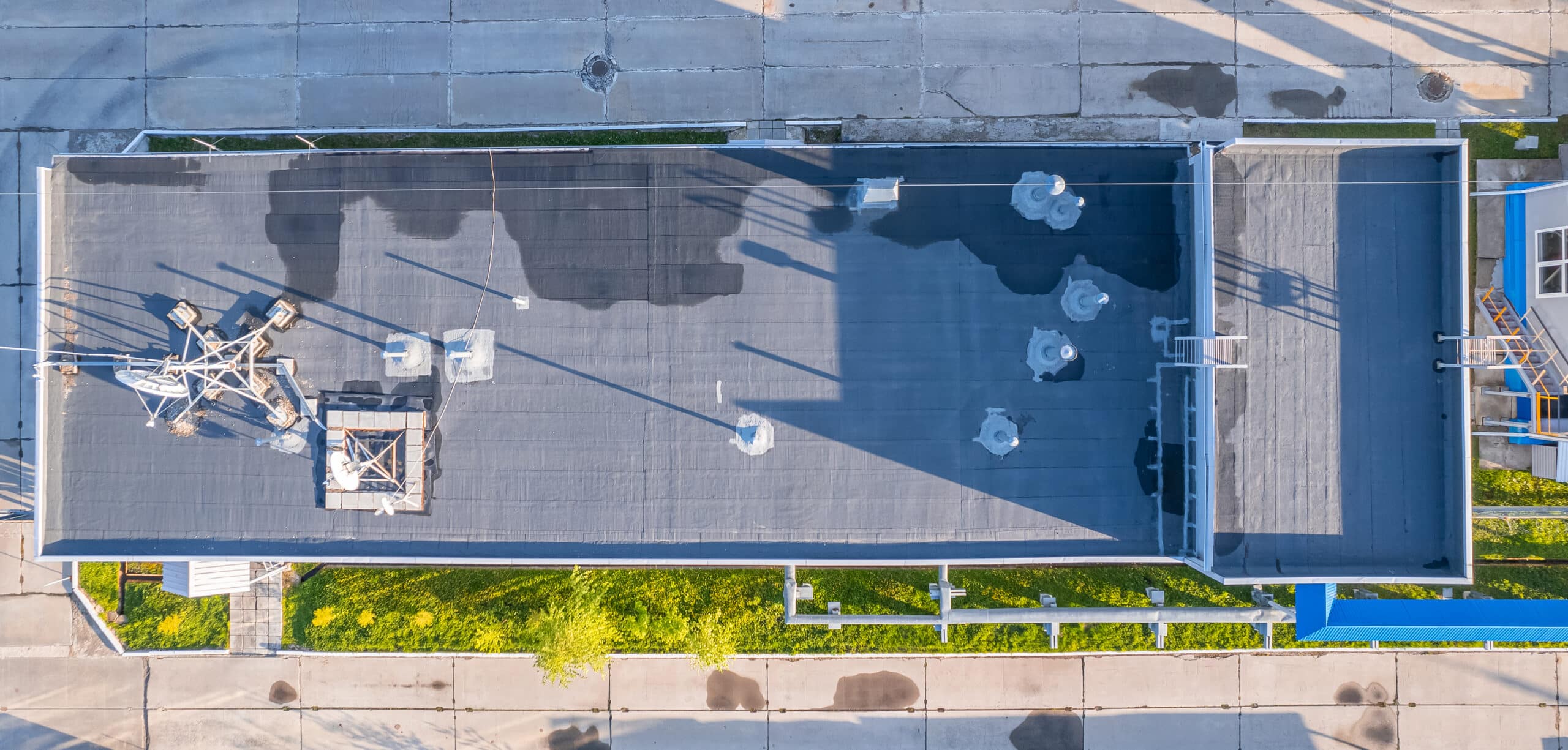
The Skybird Roofing team works with commercial property owners across the NC Triangle to assess, specify, and install the right membrane system for each building’s specific conditions. We install TPO, EPDM, and modified bitumen, and we walk every client through the trade-offs before making a recommendation. Our drone inspection and documentation process captures the full roof surface before any system is proposed. If you need help with commercial roofing, call us at 984-833-1223 or contact us online to schedule your free inspection.