
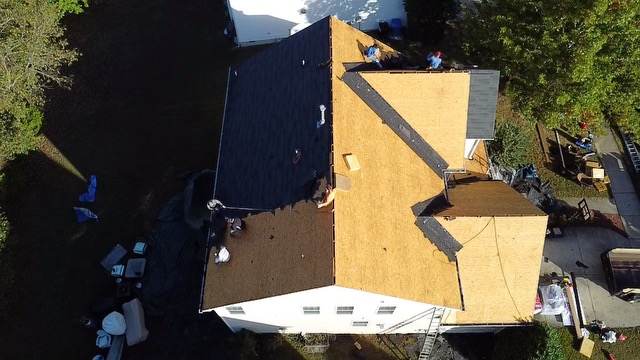
Complete Roof Replacement: When It’s Time and What Homeowners Should Know
Jump to a section:
A complete roof replacement (also called a full roof replacement or total roof replacement) involves removing every layer of your existing roofing materials down to the deck and installing an entirely new roofing system. This differs from roof repair, which addresses isolated damage while leaving most of the existing roof intact. During a whole roof replacement, contractors strip away old shingles, underlayment, flashing, and sometimes even damaged decking before building your new roof from the ground up.
Key components replaced during a complete roof replacement:
- Shingles or primary roofing material: The visible outer layer that shields your home from weather, whether asphalt, metal, tile, or another material.
- Underlayment: A water-resistant or waterproof barrier installed directly on your roof deck that provides secondary protection against moisture.
- Flashing: Metal pieces installed around penetrations, valleys, and edges to direct water away from vulnerable areas.
- Drip edge: Metal strips along the roof edges that guide water into gutters and prevent it from seeping under roofing materials.
- Ventilation components: Ridge vents, soffit vents, or other systems that allow proper airflow through your attic space.
“A complete roof replacement gives homeowners something repairs never can: a fresh start with modern materials and updated building codes. When we install a new roof, we’re not just covering up old problems. We’re creating a protection system designed to last for decades.” — The Team at Skybird Roofing
What Are the Signs You Need Complete Roof Replacement?
Knowing when repairs no longer make financial sense can save you thousands of dollars in repeated fixes and potential water damage. Here are the most reliable indicators that your roof has reached the end of its serviceable life and needs full replacement rather than spot repairs.
Warning signs that indicate replacement is necessary:
- Age exceeding expected lifespan: Asphalt shingle roofs typically last 20-25 years, while architectural shingles may reach 30 years. If your roof is approaching or past these milestones, replacement planning should begin.
- Widespread shingle damage: When curling, cracking, or missing shingles appear across multiple areas rather than isolated spots, the entire roofing system is likely deteriorating.
- Granule loss in gutters: Finding significant amounts of shingle granules in your gutters or downspouts signals that your shingles have lost their protective coating.
- Sagging roof deck: Visible dips or sags in your roofline indicate structural problems with the decking underneath, often caused by prolonged moisture exposure.
- Daylight through roof boards: If you can see light coming through your roof deck from inside your attic, moisture and pests can enter just as easily.
- Recurring leaks: Multiple leaks or leaks that return after repair suggest system-wide failure rather than isolated issues.
Roof Lifespan by Material Type
| Roofing Material | Average Lifespan | Factors That Shorten Lifespan |
|---|---|---|
| 3-Tab Asphalt Shingles | 15-20 years | Poor ventilation, extreme heat exposure |
| Architectural Asphalt Shingles | 25-30 years | Storm damage, improper installation |
| Metal Roofing | 40-70 years | Coastal salt exposure, improper fastening |
| Clay or Concrete Tile | 50-100 years | Walking damage, freeze-thaw cycles |
| Wood Shakes | 20-30 years | Moisture, lack of treatment |
| Slate | 75-150 years | Impact damage, poor flashing maintenance |
A professional roof inspection can help you determine whether your roof has reached the point where replacement makes more sense than continued repairs. Our team examines both visible damage and underlying conditions that homeowners often cannot assess from the ground.
How Long Does Complete Roof Replacement Take?
Timeline expectations matter when you’re planning around weather windows and daily life disruptions. Most residential roof replacement projects for average-sized homes take between one and three days to complete, though several factors can extend or shorten this window.
Factors that affect project duration:
- Roof size and complexity: A simple gable roof on a 1,500-square-foot home takes far less time than a complex hip roof with multiple dormers on a 3,500-square-foot home.
- Material type being installed: Asphalt shingles install faster than metal panels, tiles, or slate, which require more careful handling and placement.
- Deck condition: If contractors discover rotted or damaged decking during tear-off, repairs add time before new materials can be installed.
- Weather conditions: Rain delays work entirely, while extreme heat can slow crews and affect material handling.
- Crew size: Larger, experienced crews complete work faster than smaller teams.
- Permits and inspections: Local building department requirements may add waiting periods at certain project stages.
Typical Timeline by Project Size
| Roof Size (Square Feet) | Simple Roof Shape | Complex Roof Shape |
|---|---|---|
| Under 1,500 | 1 day | 1-2 days |
| 1,500-2,500 | 1-2 days | 2-3 days |
| 2,500-3,500 | 2-3 days | 3-4 days |
| Over 3,500 | 3-4 days | 4-7 days |
“We tell homeowners to plan for the unexpected during replacement projects. A roof that looks fine from the outside might reveal surprises once we start the tear-off. Building extra time into your expectations prevents frustration and helps us do the job right.” — The Team at Skybird Roofing
What Does the Complete Roof Replacement Process Look Like?
Understanding each phase of new roof installation helps you prepare your home and family for what happens during the project. The complete roof replacement process follows a logical sequence designed to protect your home while building a durable new roofing system.
Phase 1: Pre-installation preparation
Before crews arrive, your roof replacement contractor will order materials, pull necessary permits, and schedule the work. On your end, preparation includes moving vehicles out of the driveway to make room for material delivery and dumpsters. We also recommend taking down any fragile items from walls, as the vibrations from tear-off work can shake your home.
Phase 2: Tear-off and deck inspection
Crews begin by removing all existing roofing materials layer by layer. Shingles, underlayment, and old flashing come off, exposing the roof deck beneath. This phase creates significant debris, which is why dumpsters are positioned close to the work area. Once the deck is exposed, contractors inspect every inch for rot, water damage, or structural problems that need addressing before new materials go on.
Phase 3: Deck repairs and preparation
Any damaged decking gets replaced with new plywood or OSB (oriented strand board). Even small soft spots require attention, as they’ll only worsen under new roofing materials. After repairs, contractors install drip edge along the eaves and rakes to protect these vulnerable areas from water intrusion.
Phase 4: Underlayment and flashing installation
Synthetic underlayment or felt paper goes down over the entire deck, creating a secondary moisture barrier. In colder climates or areas prone to ice dams, ice and water shield membrane is applied along eaves and in valleys. Metal flashing gets installed around all penetrations like chimneys, vents, and skylights, as well as in valleys where two roof planes meet.
Phase 5: Primary roofing material installation
Whether you’ve chosen asphalt shingles, metal roofing, or another material, installation follows manufacturer specifications and local building codes. For shingles, this means proper nail placement, correct exposure, and careful alignment. Ridge caps go on last, completing the system.
Phase 6: Cleanup and final inspection
Professional crews remove all debris, run magnetic sweepers over your yard and driveway to collect stray nails, and haul away old materials in the dumpster. A final walkthrough with your contractor confirms the work meets your expectations, and any required building inspections get scheduled.
What Does Complete Roof Replacement Cost by Material Type?
Budget planning requires understanding how material choices affect your total investment. Complete roof replacement cost varies widely based on the roofing material you select, with labor accounting for roughly 60% of most projects and materials making up the remaining 40%.
Cost Comparison by Roofing Material (Per Square Foot Installed)
| Material | Cost Range Per Sq Ft | 2,000 Sq Ft Roof Estimate | Best For |
|---|---|---|---|
| 3-Tab Asphalt | $3.50-$5.50 | $7,000-$11,000 | Budget-conscious homeowners |
| Architectural Asphalt | $4.50-$7.50 | $9,000-$15,000 | Balance of cost and durability |
| Standing Seam Metal | $8.00-$16.00 | $16,000-$32,000 | Longevity and energy efficiency |
| Metal Shingles | $7.00-$12.00 | $14,000-$24,000 | Metal benefits with traditional look |
| Clay Tile | $10.00-$18.00 | $20,000-$36,000 | Mediterranean/Spanish style homes |
| Slate | $15.00-$30.00 | $30,000-$60,000 | Historic homes, maximum longevity |
Additional factors that influence total cost:
- Roof pitch: Steeper roofs require additional safety equipment and slower work, increasing labor costs by 10-25%.
- Accessibility: Limited access for material delivery or homes surrounded by landscaping add to labor time and cost.
- Local labor rates: Regional differences in contractor pricing can swing costs significantly in either direction.
- Permit fees: Building permits for residential roof replacement typically range from $100 to $500 depending on your jurisdiction.
- Disposal costs: Removing multiple layers of old roofing costs more than single-layer removal.
- Seasonal timing: Off-season installation during late fall or winter may offer discounts in some markets.
“We encourage homeowners to think about whole roof replacement cost as a long-term investment rather than just an upfront expense. A roof that costs more now but lasts twice as long often delivers better value over the time you own your home.” — The Team at Skybird Roofing
Should You Repair or Replace Your Entire Roof?
The repair versus replace decision comes down to math, age, and your plans for the home. Sometimes a targeted repair makes perfect sense; other times, it’s throwing good money after bad. Here’s how to think through this choice.
Repair typically makes sense when:
- Damage is isolated: Storm damage affecting one section of an otherwise healthy roof can often be repaired effectively.
- Your roof is relatively new: If your roof is less than halfway through its expected lifespan and in good overall condition, repairs extend its remaining life.
- You’re selling soon: Minor repairs for a roof with 5-10 years of remaining life may suffice if you’re moving within a year or two.
- Budget constraints are real: A quality repair can buy time while you save for eventual replacement.
Replacement usually makes more sense when:
- Repair costs exceed 30% of replacement cost: At this threshold, you’re getting minimal additional life from significant expenditure.
- Multiple repair areas exist: When damage appears in several locations, more will likely follow soon.
- Your roof has reached 80% of its expected lifespan: Repairs at this stage delay the inevitable without adding significant protection.
- You’re planning to stay long-term: Investing in a new roof makes sense when you’ll enjoy its full lifespan.
- Insurance claims are involved: Major storm damage often warrants full replacement, with insurance covering much of the cost.
Repair vs. Replace Decision Guide
| Scenario | Recommended Action | Reasoning |
|---|---|---|
| 10-year-old roof, single leak | Repair | Plenty of life remaining |
| 20-year-old roof, multiple leaks | Replace | System-wide deterioration likely |
| 15-year-old roof, storm damage in one area | Repair | Isolated damage, mid-life roof |
| 25-year-old roof, no current leaks | Plan replacement | Past expected lifespan |
| Any age, sagging deck | Replace | Structural issues require full access |
How Do You Choose the Right Roof Replacement Contractor?
Your contractor choice affects every aspect of your residential roof replacement, from material quality to installation workmanship to warranty protection. Vetting contractors thoroughly protects your investment and gives you confidence in the final result.
Qualifications to verify before hiring:
- Proper licensing: Verify that contractors hold current state and local licenses required for roofing work in your area.
- Insurance coverage: Request certificates of liability insurance and workers’ compensation coverage, and confirm they’re current.
- Manufacturer certifications: Contractors certified by major manufacturers like GAF, CertainTeed, or Owens Corning have met additional training requirements and can offer extended warranties.
- Established local presence: Companies with physical locations and years of operation in your community are more likely to stand behind their work.
- Written estimates: Detailed written proposals should itemize materials, labor, timelines, and warranty information.
Questions to ask potential contractors:
- Who will supervise the work daily? A dedicated project supervisor means better quality control and faster problem resolution.
- What happens if we discover deck damage? Get pricing for potential repairs upfront to avoid surprise charges.
- What warranty do you offer on labor? Material warranties come from manufacturers, but workmanship warranties come from your contractor.
- How do you handle debris and cleanup? Professional crews include thorough cleanup as part of the standard job.
- Will you pull all required permits? Reputable contractors handle permitting and schedule required inspections.
“The cheapest bid rarely delivers the best value in roof replacement services. We’ve seen too many homeowners pay twice, once for a bargain installation and again to fix problems that appear months later. Investing in quality installation protects your material investment for decades.” — The Team at Skybird Roofing
What Should You Expect During Complete Roof Replacement?
Knowing what happens during installation day helps you prepare your household and set appropriate expectations. Full roof replacement involves significant activity around your home, and preparation makes the process smoother for everyone.
Before crews arrive:
- Clear your driveway: Material delivery trucks and dumpsters need space close to your home.
- Move patio furniture: Items around your home’s perimeter could be damaged by falling debris.
- Cover attic items: Dust and small debris can fall through during tear-off, even in well-maintained homes.
- Alert your neighbors: A courtesy heads-up about noise and increased activity maintains good relationships.
- Secure pets: Hammering, strangers, and open gates can stress animals and create escape risks.
- Mark sprinkler heads: Flagging irrigation heads near the roofline prevents damage from debris and equipment.
What to expect during installation:
- Noise levels: Tear-off and installation create significant noise, especially during the morning hours when crews work at full pace.
- Vibrations: You’ll feel the work throughout your home, particularly during the tear-off phase.
- Dust and debris: Some dust may enter your home through attic spaces or gaps around vents.
- Crew activity: Multiple workers moving around your property and across your roof is normal.
- Daily cleanup: Professional crews tarp landscaping, sweep debris, and leave your property orderly each evening.
Many homeowners choose to stay elsewhere during installation day, especially those with young children, pets sensitive to noise, or home offices. If you stay home, plan activities away from the work area and expect some disruption to your normal routine.
How Can New Roof Installation Improve Your Home?
Beyond stopping leaks, a complete roof replacement delivers benefits that affect your comfort, energy bills, and property value. Understanding these advantages helps justify the investment and informs your material selection.
Benefits of new roof installation:
- Energy efficiency gains: Modern roofing materials and proper ventilation installation can reduce cooling costs by 10-25% compared to aging roofs with deteriorated materials.
- Increased property value: Homes with new roofs consistently sell for more than comparable homes with aging roofs, with returns averaging 60-70% of installation cost at resale.
- Improved curb appeal: A new roof transforms your home’s appearance, with color and style options that complement your architecture and neighborhood.
- Better protection: Current building codes and modern installation techniques provide superior weather resistance compared to roofs installed decades ago.
- Warranty coverage: New roofs come with manufacturer warranties on materials and contractor warranties on workmanship, protecting against unexpected repair costs.
- Insurance benefits: Many insurance companies offer premium discounts for new roofs, particularly impact-resistant materials in storm-prone areas.
When you’re ready for roof replacement, consider whether it’s also time to upgrade your gutter installation. Coordinating these projects reduces total labor costs and allows both systems to be optimized together. Commercial roofing projects follow similar principles but involve additional considerations for building codes and business continuity.
Get Started With Your Roof Replacement Project
A complete roof replacement represents one of the most significant investments you’ll make in your home, and the right guidance makes all the difference. At Skybird Roofing, we walk homeowners through every decision, from material selection to color choices to project timing. Our team provides honest assessments about whether replacement is truly necessary and helps you understand your options without pressure.
Contact Skybird Roofing today if you need help with roof replacement. Whether you’re responding to obvious damage, planning ahead for an aging roof, or simply want a professional opinion about your roof’s current condition, we’re here to help you protect your home for years to come.