Flashing Repair: Preventing Costly Water Damage With Professional Roof Flashing Services
Jump to a section:
Water damage from a failing roof can cost homeowners thousands of dollars in structural repairs, mold remediation, and interior restoration. Yet many of these problems start with a small, often overlooked component: roof flashing. When flashing fails, water finds its way into your home through the gaps around chimneys, skylights, vents, and roof joints. We created this guide to help you understand flashing repair, recognize the signs of trouble, and make informed decisions about protecting your home.
What Is Roof Flashing and Why Does It Matter?
Roof flashing is thin material, typically made from galvanized steel, aluminum, or copper, installed at vulnerable points where your roof meets other surfaces. These transition areas include places where the roof meets chimneys, walls, skylights, vents, and valleys where two roof planes intersect. Flashing creates a water-resistant barrier that directs moisture away from these openings and toward your gutters and downspouts.
Think of flashing as the weatherproof seal that bridges the gap between your roofing materials and the structures that penetrate or adjoin your roof. Without properly installed and maintained flashing, every rainstorm becomes a potential source of water intrusion into your attic, walls, and living spaces.
Common Types of Roof Flashing:
- Step Flashing: L-shaped pieces installed in a stair-step pattern where roofs meet vertical walls, with each piece overlapping the one below to channel water away from the junction.
- Counter Flashing: Installed over step flashing and embedded into masonry or siding to provide a double layer of protection at wall-to-roof intersections.
- Valley Flashing: Long metal sheets placed in roof valleys where two slopes meet, directing heavy water flow toward gutters without pooling.
- Drip Edge Flashing: Installed along roof edges to prevent water from seeping under shingles and into the fascia or roof deck.
- Vent Pipe Flashing: Cone-shaped boots with rubber gaskets that seal around plumbing vents and other circular penetrations.
“We tell homeowners that flashing is like the gasket in your car engine. You might not think about it often, but when it fails, everything else starts to break down. Regular flashing inspections save our clients significant money by catching problems before they become disasters.” — The Team at Skybird Roofing
What Are the Signs Your Roof Flashing Needs Repair?
Identifying flashing problems early prevents minor issues from turning into major repairs. While some signs are obvious, others require a trained eye to detect. Here are the warning signals that indicate your flashing may be compromised.
Interior Warning Signs:
- Water Stains on Ceilings: Brown or yellowish discoloration on ceilings, particularly near chimneys or exterior walls, often points directly to flashing failure at that location.
- Peeling Paint or Wallpaper: Moisture from roof leaks can cause paint to bubble, crack, or peel on walls and ceilings near the roofline.
- Musty Odors in the Attic: A persistent damp smell in your attic suggests moisture intrusion, which frequently originates from failed flashing.
- Visible Mold Growth: Black, green, or white mold colonies on attic surfaces or upper-floor walls indicate ongoing water problems that demand immediate attention.
Exterior Warning Signs:
- Visible Rust or Corrosion: Rust spots on metal flashing weaken the material and create openings for water penetration.
- Lifted or Bent Flashing: Flashing that has pulled away from the roof surface or become bent no longer provides adequate protection.
- Cracked Caulk or Sealant: Dried, cracked, or missing sealant around flashing edges exposes gaps where water can enter.
- Missing Flashing Sections: High winds can tear away flashing pieces, leaving vulnerable areas completely exposed to the elements.
Flashing Damage Severity Assessment Table:
| Damage Level | Visual Indicators | Typical Repair Needed | Urgency |
|---|---|---|---|
| Minor | Small cracks in sealant, light surface rust | Resealing, spot treatment | Within 3-6 months |
| Moderate | Lifted edges, significant rust, dried caulk | Partial replacement, extensive resealing | Within 1-2 months |
| Severe | Missing sections, holes, active leaking | Full flashing replacement | Immediate |
| Critical | Structural damage visible, mold present | Flashing replacement plus additional repairs | Emergency service needed |
How Much Does Flashing Repair Cost?
Understanding flashing repair costs helps you budget appropriately and avoid surprises. Several factors influence the final price, including the type of flashing, material choice, roof accessibility, and the extent of damage. Here’s what you can expect when planning for flashing repair or replacement services.
Material costs vary considerably based on your choice of metal. Aluminum flashing offers the most affordable option, while copper provides superior longevity at a premium price. Labor costs depend on your roof’s pitch, height, and complexity, as steeper and higher roofs require additional safety measures and time.
Flashing Repair Cost Breakdown Table:
| Flashing Type | Average Repair Cost | Average Replacement Cost | Material Lifespan |
|---|---|---|---|
| Chimney Flashing | $200-$500 | $500-$1,500 | 15-25 years |
| Skylight Flashing | $150-$400 | $400-$1,200 | 15-20 years |
| Valley Flashing | $250-$600 | $500-$1,500 per valley | 20-30 years |
| Vent Pipe Flashing | $75-$200 | $150-$400 per vent | 10-15 years |
| Step Flashing (per 10 linear ft) | $150-$350 | $300-$700 | 20-25 years |
Factors That Affect Flashing Repair Pricing:
- Roof Pitch and Height: Steeper roofs require specialized safety equipment and take longer to navigate, increasing labor costs by 20-40% compared to standard roofs.
- Material Selection: Copper flashing costs three to four times more than aluminum but lasts significantly longer and adds aesthetic appeal to upscale homes.
- Extent of Water Damage: If water intrusion has damaged the roof deck, rafters, or insulation, these repairs add to the overall project cost.
- Geographic Location: Labor rates and material costs vary by region, with coastal and urban areas typically commanding higher prices.
- Accessibility Challenges: Complex roof designs, multiple levels, or obstacles like satellite dishes can increase installation time and cost.
“We encourage homeowners to think of flashing repair as an investment, not an expense. A $400 chimney flashing repair prevents $10,000 or more in water damage restoration costs. That’s a return on investment you can’t ignore.” — The Team at Skybird Roofing
What Makes Chimney Flashing Repair Different From Other Flashing Work?
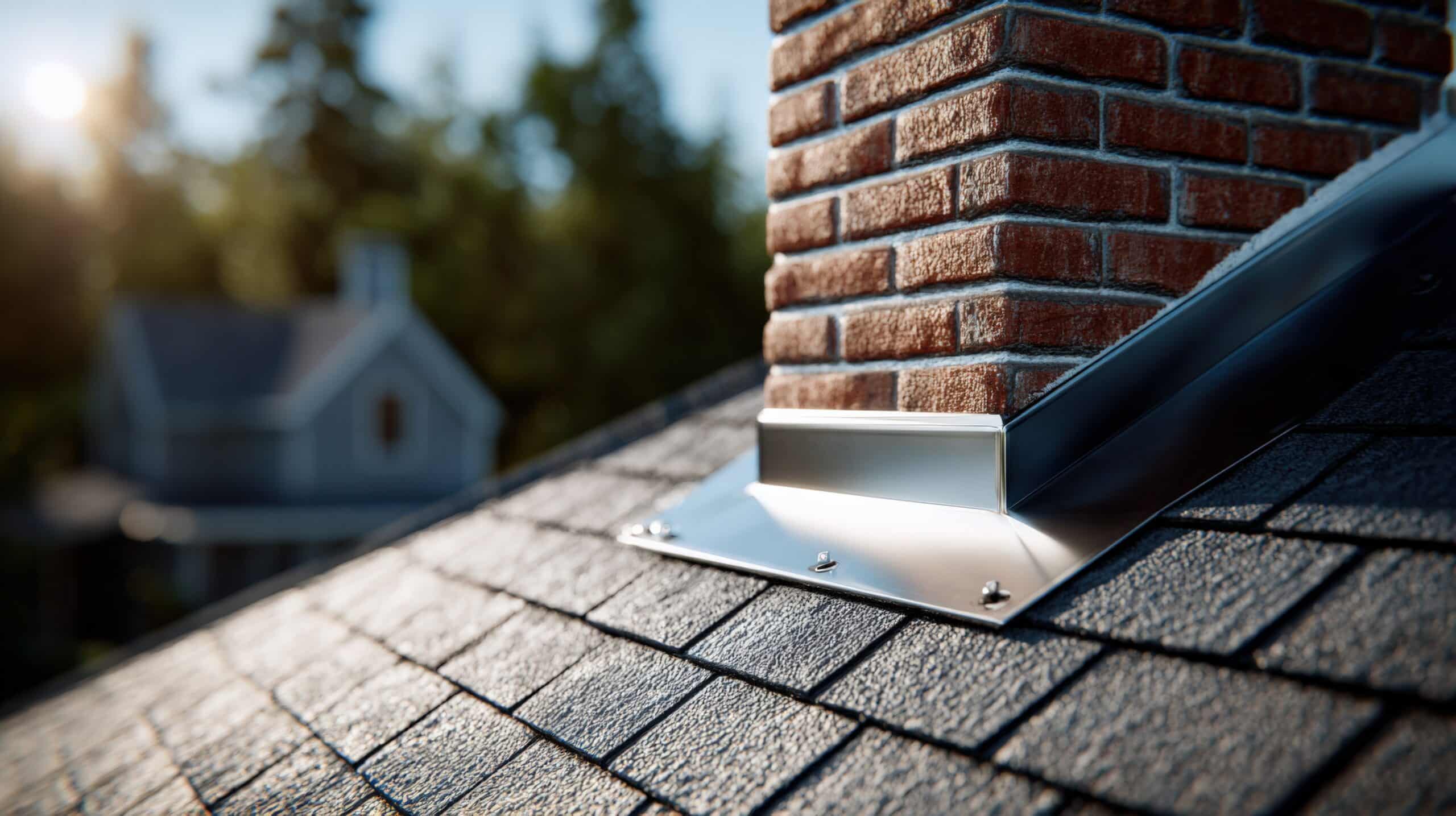
Chimney flashing repair and replacement services require specialized techniques that differ from other roof flashing services. The intersection between your chimney and roof creates one of the most vulnerable points on your entire roofing system, and proper installation demands expertise with both roofing and masonry materials.
Chimney flashing typically consists of two components working together: base flashing (also called step flashing) that lies against the roof surface, and counter flashing that embeds into the chimney mortar and overlaps the base flashing. This two-part system creates a water-shedding design that accounts for the different expansion and contraction rates of your roof and masonry chimney.
The most common cause of chimney flashing failure involves the mortar joints where counter flashing is embedded. Over time, mortar deteriorates from freeze-thaw cycles, moisture exposure, and general aging. When the mortar cracks or crumbles, the counter flashing loosens, allowing water to flow behind the entire flashing system.
Chimney Flashing Repair Process Steps:
- Complete Inspection: We examine both the roof-side and exterior chimney surfaces to assess the full scope of damage, including mortar condition and cricket integrity.
- Old Flashing Removal: Damaged flashing must be carefully removed without disturbing surrounding shingles or chimney masonry.
- Surface Preparation: The roof deck and chimney surfaces are cleaned and prepped to receive new materials and proper adhesion.
- Base Flashing Installation: New step flashing pieces are woven between shingle courses and secured to the roof deck.
- Counter Flashing Installation: The counter flashing is cut into chimney mortar joints and sealed with high-quality masonry sealant.
- Final Sealing and Testing: All seams and edges receive professional-grade sealant, and the installation is water-tested when possible.
Chimneys wider than 30 inches require a cricket (also called a saddle), which is a small peaked structure built behind the chimney to divert water around the sides rather than allowing it to pool. If your chimney cricket is damaged or missing, we include this in the repair scope.
Should You Choose DIY or Professional Flashing Repair?
The decision between DIY and professional flashing repair depends on your skill level, the scope of damage, and your comfort working at heights. While some minor repairs fall within the capability of handy homeowners, most flashing work benefits from professional expertise.
DIY vs Professional Flashing Repair Comparison Table:
| Factor | DIY Approach | Professional Service |
|---|---|---|
| Cost | $50-$200 in materials | $200-$1,500+ including labor |
| Time Required | 4-8 hours for simple repairs | 1-4 hours for most jobs |
| Warranty Coverage | None | Typically 5-10 year workmanship warranty |
| Safety Risk | High for inexperienced homeowners | Managed by trained professionals |
| Quality Assurance | Dependent on individual skill | Industry-standard installation |
| Insurance Implications | May void coverage if done improperly | Maintains coverage, often required for claims |
When DIY Flashing Repair May Be Appropriate:
- Minor Sealant Touch-Ups: Applying new caulk to small gaps in otherwise intact flashing falls within most homeowners’ abilities.
- Single-Story, Low-Pitch Roofs: Easy roof access with minimal fall risk makes simple repairs more feasible for confident DIYers.
- Temporary Fixes Before Professional Service: Emergency tarping or sealant application to stop active leaks until professional help arrives.
When Professional Service Is Necessary:
- Chimney or Skylight Flashing: These complex installations require proper integration with both roofing and vertical structures.
- Full Flashing Replacement: Removing old flashing and installing new material without damaging surrounding components demands professional technique.
- Multi-Story or Steep Roofs: The safety risks of working at significant heights outweigh potential cost savings.
- Insurance Claims: Most insurance companies require professional repairs to honor water damage claims related to roof components.
- Unknown Leak Sources: Professionals can trace leaks to their origin, which may not be directly above where water appears inside.
“We see too many homeowners who attempted DIY flashing repairs that actually made their problems worse. Improper sealant application can trap moisture behind flashing, accelerating rot and damage. If you’re uncertain about the scope of damage or repair method, a professional assessment costs far less than fixing a failed DIY attempt.” — The Team at Skybird Roofing
How Does Skylight Flashing Repair Prevent Interior Damage?
Skylights present unique challenges for flashing systems because they create a significant penetration in your roof surface while also being exposed to direct sunlight, which accelerates material degradation. Skylight flashing repair requires understanding both the flashing components and the skylight frame itself.
Modern skylights typically use a combination of metal flashing, rubber gaskets, and integrated sealing systems. Older skylights often rely more heavily on traditional metal flashing techniques similar to chimney installations. Regardless of the type, all skylights are prone to leaking as materials age and weather conditions take their toll.
The most common failure points in skylight flashing include the corners where the flashing must bend to accommodate the frame shape, the upper edge where debris and ice can dam water, and the rubber gaskets that seal the lens to the frame. A thorough skylight flashing repair addresses all these areas rather than just patching visible damage.
Common Skylight Flashing Problems and Solutions:
- Cracked or Dried Gaskets: The rubber seals around the skylight lens become brittle over time and require replacement to maintain a watertight seal.
- Corrosion at Corners: Water tends to collect at flashing corners, causing accelerated rust or corrosion that creates leak points.
- Debris Accumulation: Leaves, pine needles, and other debris can trap moisture against the flashing, promoting deterioration.
- Improper Original Installation: Budget skylights or installations that skipped steps may fail prematurely and require complete reflashing.
- Condensation Issues: Sometimes apparent leaks are actually condensation problems that require different solutions than flashing repair.
When evaluating skylight flashing repair, we also assess the overall condition of the skylight unit itself. A skylight that’s approaching the end of its service life (typically 15-20 years) may warrant complete replacement rather than just flashing repair, as the labor to access and work around the unit is similar for both procedures.
What Causes Metal Flashing Repair Needs to Arise?
Metal flashing repair becomes necessary when the material degrades from environmental exposure, improper installation, or physical damage. Understanding these causes helps you take preventive measures and recognize problems before they lead to water intrusion.
Galvanic corrosion is one of the most common causes of metal flashing failure. This occurs when dissimilar metals come into contact in the presence of moisture, creating an electrochemical reaction that corrodes one or both metals. For example, aluminum flashing in contact with copper components will deteriorate rapidly. Proper installation avoids mixing incompatible metals or uses barriers to separate them.
Primary Causes of Metal Flashing Deterioration:
- Weathering and Oxidation: Continuous exposure to rain, sun, and temperature changes gradually weakens metal flashing, with thin gauge materials failing sooner.
- Thermal Expansion Stress: Metal expands and contracts with temperature changes, which can loosen fasteners and crack sealants over time.
- Physical Impact Damage: Falling branches, hail, and foot traffic during other roof work can dent, bend, or puncture metal flashing.
- Improper Fastening: Nails or screws driven through the flat surface of flashing rather than the edges create direct leak pathways.
- Poor Quality Materials: Thin gauge metals and substandard alloys have shorter service lives and require earlier replacement.
Metal Flashing Material Comparison Table:
| Material | Durability | Cost Level | Best Applications |
|---|---|---|---|
| Aluminum | 15-20 years | Low | General use, coastal areas (corrosion resistant) |
| Galvanized Steel | 20-25 years | Low to Medium | Standard residential applications |
| Copper | 50+ years | High | Historic homes, high-end properties |
| Lead-Coated Copper | 100+ years | Very High | Premium installations, slate roofs |
| Zinc | 40-50 years | Medium to High | Self-healing surface, European-style homes |
How Can You Prevent Leaks With Professional Flashing Maintenance?
Preventing leaks with professional flashing repair and maintenance costs far less than addressing water damage after it occurs. A proactive approach to flashing care extends your roof’s lifespan and protects your home’s structural integrity.
Regular roof inspection services should include flashing assessment as a standard component. We recommend professional inspections twice yearly, ideally in spring after winter weather and in fall before the cold season begins. These inspections catch minor problems before they become expensive repairs.
Between professional inspections, homeowners can perform visual checks from the ground using binoculars or a zoom camera. Look for obvious signs of lifted, bent, or missing flashing sections. Inside your home, check ceilings and walls near roof penetrations for water stains or discoloration after heavy rains.
Preventive Flashing Maintenance Schedule:
- Twice Yearly: Professional roof and flashing inspection to identify emerging problems and maintain warranty coverage.
- After Major Storms: Visual inspection for obvious damage such as lifted or missing flashing sections.
- Every 5-7 Years: Sealant refresh on all flashing edges and joints, even if no damage is visible.
- Every 15-20 Years: Consider proactive replacement of aluminum or galvanized steel flashing approaching end of service life.
- Annually: Clear debris from roof valleys and around chimneys to prevent moisture retention against flashing.
“The most expensive flashing repair is the one you don’t do in time. We’ve seen small chimney flashing issues that could have been fixed for a few hundred dollars turn into $15,000 attic restoration projects. A yearly inspection is cheap insurance against major water damage.” — The Team at Skybird Roofing
When we identify flashing issues during inspections, we provide detailed documentation including photographs and repair recommendations. This information helps you prioritize repairs based on urgency and budget, and also creates a maintenance record that can be valuable when selling your home or filing insurance claims.
When Does Flashing Repair Require Complete Roof Work?
Sometimes flashing problems indicate or accompany broader roofing issues that require comprehensive solutions beyond just flashing work. Understanding when to expand the scope protects your investment and prevents repeated repairs.
Roof repair services often include flashing work as part of a larger project. If your shingles are nearing the end of their lifespan, replacing just the flashing creates a mismatched system where new flashing outlasts the surrounding materials. In these cases, coordinating roof replacement with new flashing installation provides better value and a consistent warranty period across all components.
Signs That Broader Roof Work May Be Needed:
- Multiple Flashing Failures: If flashing is failing at several locations simultaneously, the common factor may be age-related roofing material deterioration.
- Roof Deck Damage: Water intrusion that has rotted the roof deck beneath flashing areas requires structural repair before new flashing installation.
- Shingle Granule Loss: Significant granule loss on shingles surrounding flashing indicates the roofing material is nearing end of life.
- Previous Improper Repairs: Multiple layers of sealant or patching suggest underlying problems that band-aid solutions haven’t addressed.
- Age of Roofing System: If your roof is 15-20+ years old (for asphalt shingles), flashing problems may be one symptom of system-wide aging.
Metal roofing systems use different flashing techniques than traditional shingle roofs and typically include flashing components specifically designed for the metal panel system. Commercial roofing applications also require specialized flashing solutions appropriate for flat or low-slope roof designs.
During any roofing project, we also evaluate your gutter installation since the flashing, roofing, and drainage systems must work together to manage water effectively. Damaged gutters can cause water to back up against roof edges, accelerating flashing deterioration.
Conclusion
Protecting your home from water damage starts with maintaining the often-overlooked flashing system that seals your roof’s most vulnerable points. Whether you’re dealing with chimney flashing repair, skylight flashing issues, or general metal flashing repair needs, addressing problems promptly prevents small issues from becoming expensive disasters. The Skybird Roofing team brings years of experience to every flashing repair and replacement project, using quality materials and proper installation techniques that stand up to our region’s weather conditions. If you need help with your roofing needs, contact Skybird Roofing for a professional assessment and repair plan tailored to your home.