Flat Roof Replacement: Options, Costs, and Best Practices for Property Owners
Jump to a section:
A flat roof protects your property year after year, but even the most durable materials reach the end of their service life. When that time comes, understanding your flat roof replacement options helps you make confident decisions about materials, timing, and budget. This guide walks you through everything property owners need to know about replacing a flat roof, from recognizing warning signs to selecting the right membrane system for your building.
What Is a Flat Roof System and How Does It Differ from Pitched Roofing?
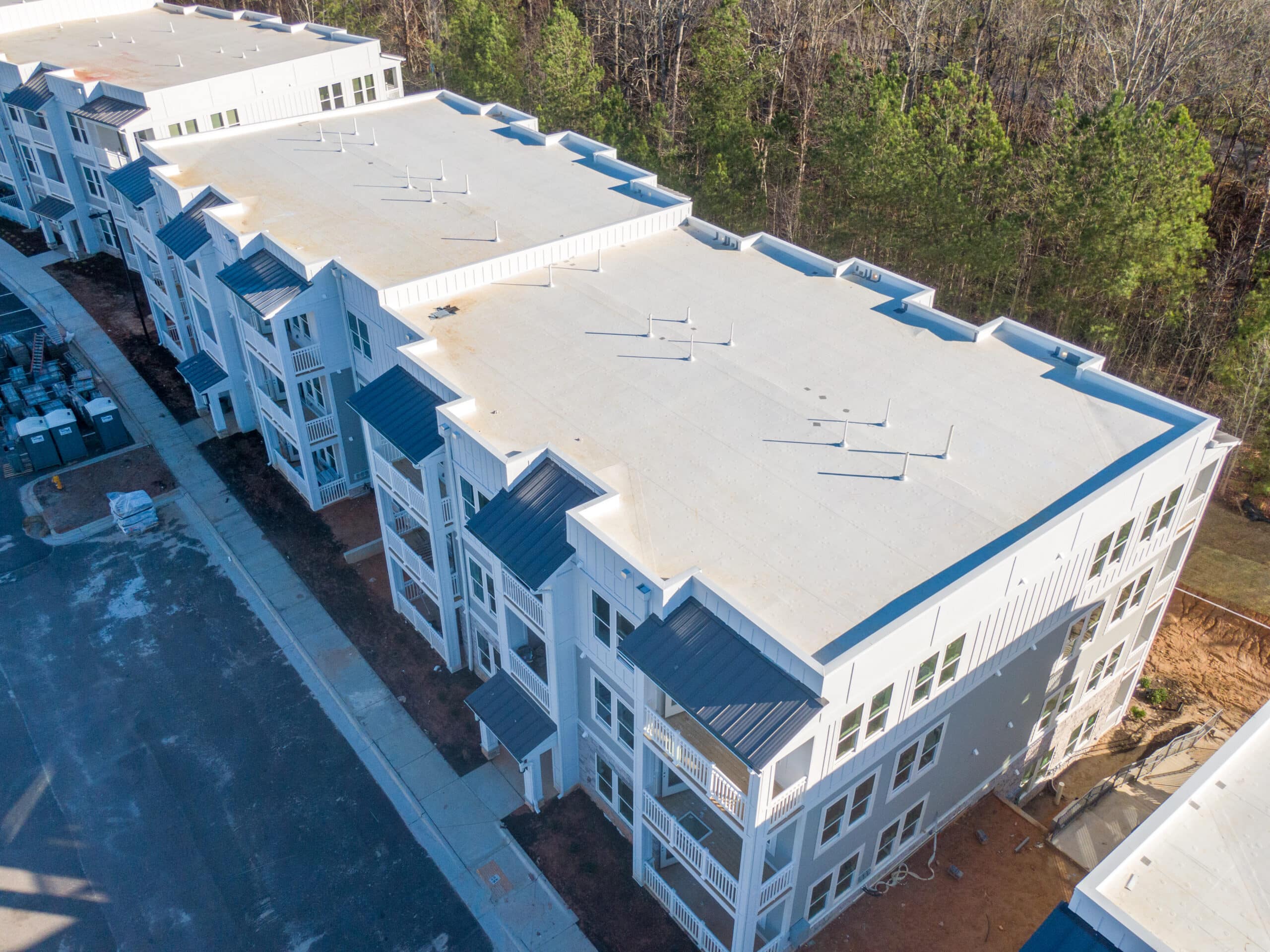
A flat roof system consists of multiple layers working together to protect your building from water intrusion and weather damage. While the term “flat” suggests a completely level surface, these roofs actually have a slight slope (typically 1/4 inch per foot) that directs water toward drainage points. This design makes them popular for commercial roofing applications, modern residential architecture, and building additions like garages or room extensions.
Unlike pitched roofs that shed water through gravity and steep angles, flat roofing relies on waterproof membrane systems to create a continuous barrier against moisture. The typical flat roof assembly includes a structural deck, vapor barrier, insulation layer, and a protective membrane on top. Because water can pool on these surfaces rather than immediately running off, material selection and proper installation become especially important for long-term performance.
Core Components of a Flat Roof System:
- Structural Deck: The foundation layer, usually made of plywood, concrete, or metal, that supports the entire roofing system and transfers loads to the building’s frame.
- Vapor Barrier: A protective layer positioned below the insulation that prevents moisture from the building interior from reaching and damaging the roof assembly.
- Insulation: Rigid foam boards or other materials that regulate indoor temperature and improve energy efficiency throughout the year.
- Membrane Surface: The waterproof outer layer that directly faces weather exposure and protects everything beneath it from rain, snow, and UV radiation.
What Are the Warning Signs Your Flat Roof Needs Replacement?
Knowing when to replace your flat roof saves you from expensive emergency repairs and interior damage. We recommend scheduling a professional roof inspection annually, but you can also watch for these warning indicators between checkups. Catching problems early gives you time to plan and budget for replacement rather than reacting to sudden failures.
“Property owners often wait until they see water stains on the ceiling before calling us, but by that point, damage has already spread to insulation and structural components. We encourage clients to view annual inspections as an investment that protects their entire building, not just the roof.” — The Team at Skybird Roofing
Key Indicators That Flat Roof Replacement Is Approaching:
- Persistent or Recurring Leaks: If water intrusion continues after multiple roof repair attempts, the underlying membrane has likely deteriorated beyond effective patching.
- Ponding Water That Remains 48+ Hours: Standing water that fails to drain within two days after rainfall accelerates membrane breakdown and indicates drainage or structural issues.
- Visible Cracks, Blisters, or Bubbles: Surface deformities signal trapped moisture or air beneath the membrane, compromising the waterproof seal and allowing water penetration.
- Membrane Shrinkage or Separation: When roofing material pulls away from edges, walls, or penetrations, it creates direct paths for water to enter the building.
- Age Beyond Expected Lifespan: Most flat roofs perform well for 15 to 30 years depending on material type; roofs approaching these thresholds deserve close evaluation.
- Rising Energy Bills: Unexplained increases in heating or cooling costs often indicate compromised roof insulation from moisture infiltration.
- Interior Ceiling Stains or Mold: Discoloration, peeling paint, or musty odors inside your building reveal ongoing water damage from a failing roof.
Flat Roof Lifespan by Material Type
| Material | Expected Lifespan | Key Factors Affecting Longevity |
|---|---|---|
| EPDM (Rubber) | 20-30 years | UV exposure, seam integrity, proper adhesion |
| TPO | 15-25 years | Membrane thickness, installation quality, heat welding |
| PVC | 20-30 years | Chemical exposure, puncture avoidance, maintenance |
| Modified Bitumen | 15-20 years | Climate conditions, seam quality, coating maintenance |
| Built-Up Roofing (BUR) | 20-30 years | Number of layers, gravel coverage, drainage |
| Metal | 40-50+ years | Coating quality, fastener integrity, expansion joints |
Should You Repair or Replace Your Flat Roof?
The repair versus replacement decision depends on several factors beyond simple cost comparison. While repairs often seem more affordable upfront, repeated patch jobs on an aging roof can cost more over time than a single roof replacement. We use a practical guideline called the “50% Rule” when advising property owners: if damage affects more than half of your roof surface, or if your roof has exceeded 80% of its expected service life, replacement typically offers better long-term value.
Consider the cumulative cost of repairs over the past several years. If you find yourself calling for repairs more than once annually, or if repair costs are approaching 30% of what full replacement would cost, investing in a new roof makes financial sense. A new flat roof installation comes with manufacturer warranties, improved energy efficiency, and decades of reliable protection.
Factors That Favor Repair:
- Localized Damage: When problems affect a small, isolated area (less than 25% of roof surface), targeted repairs can extend your roof’s service life affordably.
- Roof Age Under 10 Years: Newer roofs with minor issues typically respond well to repairs and have plenty of remaining useful life.
- Single Issue Type: If damage stems from one identifiable cause (a fallen branch, for example) rather than widespread deterioration, repair addresses the root problem.
Factors That Favor Replacement:
- Multiple Problem Areas: When issues appear across different sections of your roof, the membrane has likely reached the end of its functional life.
- Structural Concerns: Sagging, deck rot, or compromised support systems require more than surface-level fixes and benefit from complete system replacement.
- Frequent Repair History: Roofs requiring attention more than once per year are sending clear signals that patchwork solutions no longer provide adequate protection.
- Energy Performance Decline: When insulation has absorbed moisture from years of small leaks, only full replacement restores proper thermal performance.
Which Flat Roof Replacement Materials Offer the Best Performance?
Selecting the right material for your flat roof membrane replacement involves balancing cost, durability, energy efficiency, and compatibility with your building’s needs. Each material type brings distinct advantages, and the best choice depends on your climate, budget, and how you use your building. We help property owners evaluate these options during our consultation process so you can make informed decisions.
“Material selection often comes down to understanding trade-offs. TPO costs less upfront and reflects heat well, but PVC outlasts it in chemically demanding environments. EPDM delivers proven durability at competitive prices. The right answer depends on your specific building and goals.” — The Team at Skybird Roofing
TPO (Thermoplastic Polyolefin): This single-ply membrane has become the fastest-growing choice in flat roofing thanks to its balance of affordability and performance. TPO’s white reflective surface bounces sunlight away from your building, reducing cooling costs by 10% to 30% in warm climates. The material resists UV degradation, punctures, and chemical exposure while offering heat-welded seams that create watertight bonds. Property owners appreciate TPO for its lower price point compared to PVC while delivering comparable energy savings.
EPDM (Ethylene Propylene Diene Monomer): Often called “rubber roofing,” EPDM has protected flat roofs for over 50 years with a proven track record. This synthetic rubber membrane handles temperature extremes from -40°F to 300°F without cracking, making it suitable for virtually any climate. EPDM comes in black (which absorbs heat, beneficial in northern regions) or white (which reflects heat for southern buildings). The material installs quickly in large sheets, reducing seam quantity and potential leak points. EPDM offers one of the longest lifespans among membrane options when properly maintained.
PVC (Polyvinyl Chloride): Known for outstanding durability and chemical resistance, PVC roofing performs well on buildings where grease, oil, or industrial chemicals might contact the roof surface. Restaurants, manufacturing facilities, and properties with rooftop HVAC equipment benefit from PVC’s ability to resist these substances. Heat-welded seams create permanent bonds stronger than the membrane itself. While PVC carries higher upfront costs than TPO or EPDM, its 30+ year lifespan and minimal maintenance requirements often justify the investment over time.
Modified Bitumen: This multi-layer system combines asphalt with rubber or plastic polymers for improved flexibility and weather resistance. Modified bitumen works well in climates with significant temperature swings because the material expands and contracts without cracking. Installation options include torch-applied, cold-adhered, and self-stick methods. The material provides excellent waterproofing at moderate cost, though its darker surface absorbs more heat than white membrane options.
Built-Up Roofing (BUR): The original flat roofing technology, BUR creates a durable surface through alternating layers of bitumen and reinforcing fabric topped with gravel or reflective coating. This time-tested approach handles foot traffic well and offers excellent waterproofing through its multiple redundant layers. BUR costs less than many newer options but weighs more and requires adequate structural support. The gravel surface protects underlying layers from UV damage and provides fire resistance.
Metal Roofing: For property owners prioritizing longevity, metal roofing delivers exceptional performance lasting 40 to 70 years with minimal maintenance. Standing seam metal systems work on flat roofs with proper design considerations. Steel handles heavy snow loads, aluminum resists coastal salt air, and both materials reflect sunlight for energy efficiency. Higher upfront investment pays dividends through decades of reliable service and reduced lifetime costs.
Flat Roof Material Cost and Performance Comparison
| Material | Cost Per Square Foot | Lifespan | Energy Efficiency | Best Applications |
|---|---|---|---|---|
| TPO | $4 – $14 | 15-25 years | High (reflective white) | Budget-conscious commercial, retail |
| EPDM | $4 – $13 | 20-30 years | Moderate to High | Warehouses, industrial, residential |
| PVC | $6 – $12 | 20-30 years | High (reflective) | Restaurants, chemical facilities |
| Modified Bitumen | $4 – $8 | 15-20 years | Moderate | Variable climates, general use |
| BUR | $4 – $10 | 20-30 years | Low to Moderate | High-traffic roofs, traditional buildings |
| Metal | $4 – $30 | 40-70 years | High | Long-term investments, harsh climates |
How Much Does Flat Roof Replacement Cost?
Flat roof replacement cost varies based on several factors, with total project prices typically ranging from $4 to $15 per square foot installed. For a 1,500-square-foot roof, property owners can expect to invest between $6,000 and $22,500 depending on material selection, roof complexity, and local labor rates. Commercial flat roof replacement projects cover larger areas and commonly run between $40,000 and $90,000 for mid-sized buildings.
Material costs account for roughly 40% to 60% of your total project expense, with labor representing most of the remainder. Geographic location influences both material availability and labor rates significantly. Roofs requiring structural repairs, new insulation, or updated drainage systems will cost more than straightforward membrane replacement on sound substrate.
Factors That Influence Your Flat Roof Replacement Cost:
- Roof Size: Larger surface areas require more materials and labor hours, directly increasing total cost while often reducing the per-square-foot rate.
- Material Selection: Premium options like PVC or metal carry higher price tags than EPDM or modified bitumen, though longer lifespans offset upfront costs.
- Existing Roof Removal: Tearing off old roofing materials adds $1 to $5 per square foot, typically totaling $1,000 to $1,500 for average residential projects.
- Structural Repairs: Damaged decking, rotted joists, or compromised support systems require attention before new membrane installation can proceed.
- Insulation Upgrades: Adding or replacing insulation improves energy efficiency but increases project scope and cost.
- Drainage Improvements: Installing new drains, scuppers, or improving slope for better water flow adds to total investment.
- Permits and Inspections: Building permits typically cost $250 to $600, with higher fees for larger commercial properties.
Flat Roof Replacement Cost by Roof Size
| Roof Size (Sq Ft) | Low Estimate | Average Cost | High Estimate |
|---|---|---|---|
| 500 | $2,000 | $4,500 | $7,500 |
| 1,000 | $4,000 | $9,000 | $15,000 |
| 1,500 | $6,000 | $13,500 | $22,500 |
| 2,000 | $8,000 | $18,000 | $30,000 |
| 3,000 | $12,000 | $27,000 | $45,000 |
How Long Does Flat Roof Replacement Take?
Most residential flat roof replacement projects complete within two to four days once work begins. Commercial projects covering larger areas may require one to three weeks depending on building size and complexity. Weather delays, material delivery timing, and permit processing can extend your overall project timeline beyond the actual installation period.
Built-up roofing systems take longer than single-ply membranes because BUR requires multiple layer applications with drying time between each. Single-ply options like TPO, EPDM, and PVC install faster since they apply as large sheets covering substantial area quickly. The complete timeline from initial consultation through final cleanup typically spans two to four weeks when accounting for scheduling, inspections, and material ordering.
“We tell property owners to expect about a week from start to finish for typical residential flat roof replacement, including setup and cleanup. Commercial projects need more planning, but we work to minimize business disruption by coordinating closely with building managers and scheduling work during lower-traffic periods.” — The Team at Skybird Roofing
Flat Roof Installation Timeline by Material
| Material Type | Installation Time | Factors Affecting Duration |
|---|---|---|
| TPO | 2-3 days | Heat welding conditions, seam complexity |
| EPDM | 2-3 days | Adhesion method, weather requirements |
| PVC | 2-4 days | Chemical welding precision, penetrations |
| Modified Bitumen | 3-4 days | Application method, layer count |
| BUR | 4-5 days | Multiple layers, drying time between applications |
| Metal | 3-5 days | Custom fitting, fastener installation |
What Best Practices Maximize Flat Roof Longevity After Replacement?
Your new flat roof represents a significant investment, and proper care extends its service life while preventing costly problems. We recommend establishing a maintenance routine immediately after installation rather than waiting for issues to develop. Proactive attention to your roof protects your investment and catches small problems before they become major repairs.
Proper drainage remains the single most important factor in flat roof longevity. Water that pools on your roof accelerates membrane degradation and increases leak risk exponentially. Keep drains, scuppers, and gutters clear of debris to allow water to flow freely off your roof surface. Consider scheduling gutter installation or upgrades alongside your roof replacement if your current drainage system shows age or inadequate capacity.
Maintenance Practices That Protect Your Investment:
- Schedule Semi-Annual Inspections: Professional evaluations in spring and fall identify developing issues before they cause interior damage or require expensive repairs.
- Clear Debris Promptly: Leaves, branches, and accumulated dirt trap moisture against your membrane and clog drainage pathways, accelerating deterioration.
- Address Ponding Water Immediately: If water remains on your roof more than 48 hours after rain, contact your roofing contractor to evaluate and correct drainage issues.
- Limit Rooftop Traffic: Foot traffic can puncture or wear membrane surfaces; establish designated walking paths and limit access to necessary maintenance visits.
- Inspect After Severe Weather: High winds, hail, and heavy snow can damage roofing materials; check your roof following significant weather events.
- Maintain Rooftop Equipment: HVAC units, vents, and other rooftop installations should have proper protective pads and flashing to prevent membrane damage.
- Document Everything: Keep records of inspections, repairs, and maintenance activities to support warranty claims and track your roof’s condition over time.
What Questions Should You Ask Before Hiring a Flat Roof Contractor?
Selecting the right contractor determines whether your flat roof replacement delivers decades of reliable protection or ongoing headaches. Qualified professionals bring experience with your specific roof type, manufacturer certifications, and proper insurance coverage. Taking time to verify credentials and ask pointed questions protects your investment and gives you confidence in the work being performed.
“Credentials matter in commercial and residential flat roof replacement. Ask to see manufacturer certifications, not just general contractor licenses. A certified installer has completed training specific to the materials they’re installing and can offer manufacturer-backed warranties that protect you for years to come.” — The Team at Skybird Roofing
Questions to Ask Prospective Roofing Contractors:
- Licensing and Insurance: Verify current state licensing, workers’ compensation coverage, and liability insurance that protects you from responsibility for jobsite injuries or property damage.
- Manufacturer Certifications: Ask whether the contractor holds certified installer status from the membrane manufacturer, which often enables extended warranty coverage.
- Project References: Request contact information for recent clients with similar roof types so you can verify quality and professionalism firsthand.
- Written Estimates: Compare detailed written proposals that specify materials, quantities, labor, and timeline rather than verbal quotes or vague summaries.
- Warranty Terms: Understand both manufacturer material warranties and workmanship guarantees from the contractor, including what each covers and for how long.
- Permit Responsibility: Confirm who handles building permit acquisition and ensure the contractor knows local code requirements for your area.
- Payment Schedule: Avoid contractors demanding full payment upfront; typical arrangements involve deposits with final payment upon satisfactory completion.
Partner With Skybird Roofing for Your Flat Roof Project
Flat roof replacement requires careful planning, quality materials, and skilled installation to protect your property for decades. Whether you manage a commercial building or own a home with flat roofing sections, working with experienced professionals delivers confidence and lasting results. Our team brings the expertise, manufacturer certifications, and commitment to quality that your investment deserves.
Contact Skybird Roofing today if you need help with roofing services. We provide thorough inspections, clear recommendations, and professional installation that protects your property and your budget. Let us show you why property owners throughout our service area trust us with their most important building component.