Green Roofing Solutions for Commercial Properties
Jump to a section:
Choosing a green roofing solution for your commercial building is a capital investment decision, and it deserves to be treated like one. The term “green roofing” covers a wide spectrum of systems, from basic reflective membranes to full vegetative assemblies with growing media and plant layers, and the right starting point depends on your building’s structural capacity, your budget, and what you need the roof to actually do for your operating costs.
- Green roofing is a spectrum, not a single product – options range from cool roof coatings to vegetative systems, and most buildings qualify for at least one cost-effective solution.
- Structural pre-qualification is step one – vegetative systems add significant load, and skipping this assessment is the most common reason commercial green roof projects stall or go over budget.
- NC’s climate makes reflective membranes especially effective – high humidity combined with intense summer heat means that cool roofs and white TPO can meaningfully cut HVAC load.
- ROI varies significantly by system type – cool roof coatings and reflective membranes typically deliver faster payback than vegetative systems for most existing commercial buildings.
- NC municipalities offer stormwater fee credits – vegetative and permeable roof systems may qualify, which changes the financial case for some property owners.
- The right contractor matters as much as the right system – installation quality determines whether a green roofing system performs as designed or underperforms from day one.
What “Green Roofing” Actually Means for a Commercial Building
The term is used loosely, creating confusion for property owners trying to evaluate real options. In practice, green roofing for commercial properties falls into four categories, each with a different cost structure, structural requirement, and performance profile.
The four main categories of commercial green roofing:
- Cool roof coatings – Applied over an existing membrane, these highly reflective coatings reduce surface temperature and extend the life of the roof beneath them. They are the lowest-cost entry point and require no structural changes.
- Reflective membrane systems (TPO, PVC) – Single-ply membranes with high solar reflectance installed during a full roof replacement. White TPO is now the most widely installed commercial membrane in the US owing to its energy performance and cost-effectiveness.
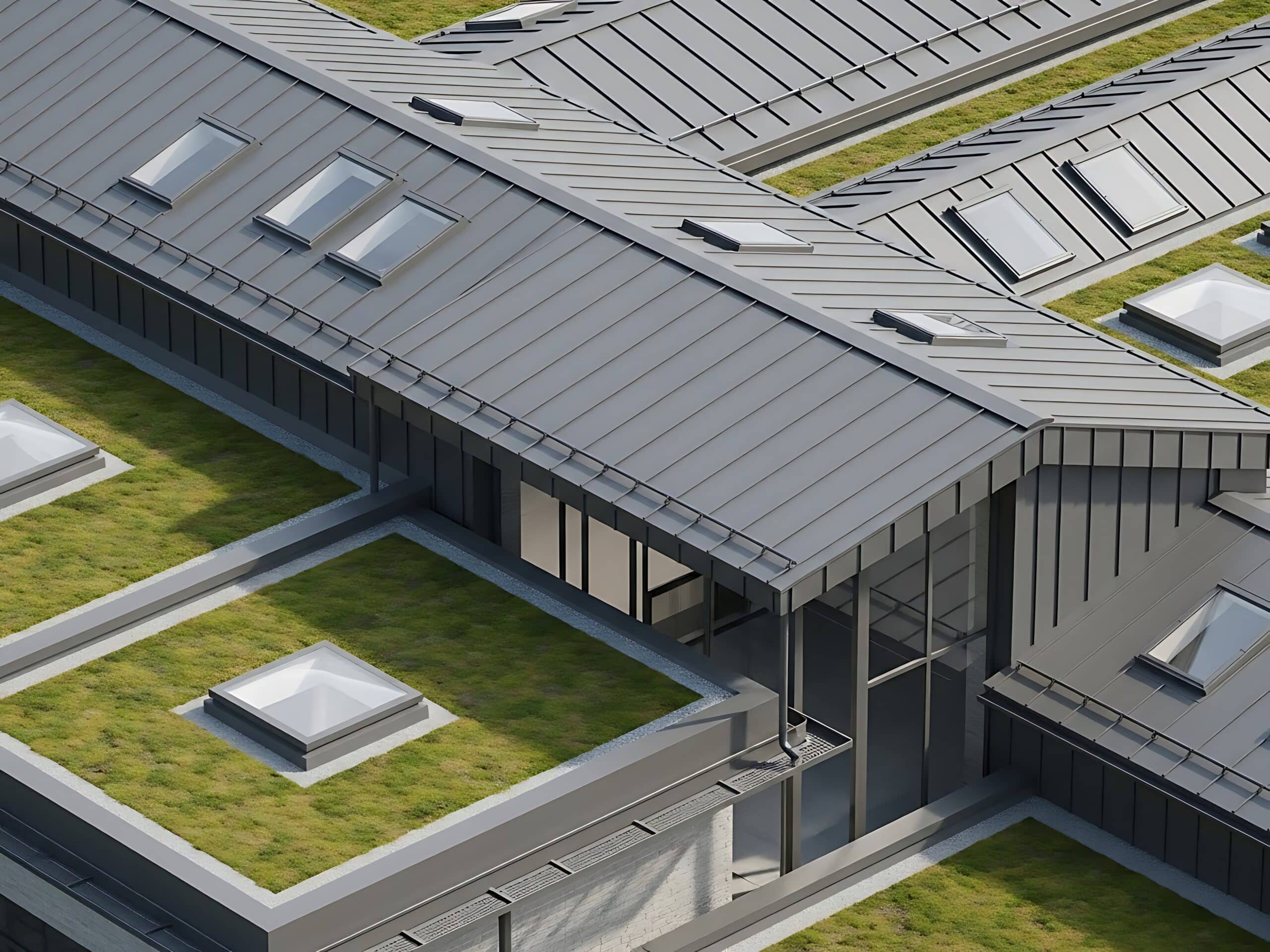
- Extensive vegetative roofs – Lightweight planted systems, typically 3 to 6 inches of growing medium, seeded with drought-tolerant sedums. These add roughly 15 to 50 pounds per square foot of load and require a structural assessment before installation.
- Intensive vegetative roofs – Deeper systems with more diverse plantings, walkways, and sometimes recreational space. These add 80 to 150 or more pounds per square foot and are typically designed into new construction or major renovations.
For most existing commercial buildings in the Triangle, the practical conversation starts with the first two categories and builds from there based on what the structure can support and what the budget allows. Jumping to a full vegetative system without first understanding whether your building can handle the load adds cost and risk without adding value.
“We talk to commercial property owners all the time who come in asking about living roofs and leave with a clear picture of what their building actually needs. In a lot of cases, a high-performance TPO membrane with proper insulation delivers 80 percent of the energy benefit at a fraction of the complexity. The best green roofing decision is the one that actually gets installed and performs.” — The team at Skybird Roofing
Why NC’s Climate Changes the Green Roofing Equation
Green roofing performance data is often presented as national averages, which can be misleading when you are making a site-specific decision for a building in the NC Triangle. The Triangle sits in a humid subtropical climate zone with long, hot summers, high solar heat gain, and a long cooling season. That combination makes certain green roofing strategies far more impactful here than they would be in cooler or drier regions.
A dark commercial roofing membrane, typical of older EPDM installations, can reach surface temperatures of 150 to 180 degrees Fahrenheit on a summer afternoon in North Carolina. A white TPO membrane or a cool roof coating on the same building can hold surface temperatures 50 to 80 degrees lower under identical conditions. That temperature difference translates directly to reduced heat transfer into the building, which reduces mechanical cooling demand on the floors below. In a climate where air conditioning runs for six or more months of the year, the cumulative savings are real and measurable.
Humidity is the other factor that shapes which green roofing systems perform well here. Extensive vegetative roofs that rely on drought-tolerant sedums work well in the Triangle’s climate because our rainfall patterns generally support low-maintenance plantings without costly irrigation systems. The same is not true in arid climates, where vegetative roofs require ongoing watering to survive. For NC property owners, a properly specified extensive green roof can function with minimal irrigation, reducing the ongoing operational costs that make some property managers hesitant about vegetative systems.
“One thing we stress with our commercial clients is that energy performance data from northern states or dry western climates does not always translate to North Carolina. Our cooling season is long and our humidity is high. The roofing choices that perform best here reflect those conditions specifically, and a contractor who is quoting you a generic system without accounting for local climate is not giving you the full picture.” — Jacob Vollmer, owner of Skybird Roofing
Structural Pre-Qualification: The Step Most Property Owners Skip
Before evaluating any vegetative system, your building needs a structural load assessment. This is not optional. Green roof systems, even the lightest extensive assemblies, add dead load to a roof deck that was designed for a specific weight limit. Exceeding that limit creates liability, shortens the life of your structural components, and can void your building’s certificate of occupancy if discovered during an inspection.
What a structural pre-qualification covers:
- Dead load capacity review – A structural engineer evaluates the existing load calculations for your roof deck, joists, and support columns to determine how much additional weight the structure can carry.
- Drainage capacity – Vegetative systems retain water, which adds a variable load on top of the fixed load from the growing medium and plants. Your drainage design has to account for both the saturated weight of the growing media and overflow events.
- Membrane compatibility – The waterproof membrane beneath a vegetative system has to be root-resistant and correctly specified for the system being installed above it. Incompatible membranes are a common failure point in retrofit green roof projects.
- Access and maintenance provisions – Vegetative roofs require periodic maintenance. Your assessment should confirm that safe roof access is available for the people who will maintain the system after installation.
If the structural assessment shows your building cannot support a vegetative system without reinforcement, that does not close the door on green roofing. It simply moves the conversation to cool roof coatings and reflective membranes, which add negligible weight and can be installed on virtually any commercial roof. Knowing this before you spend money on a vegetative system design saves significant time and cost.
Comparing ROI Across Green Roofing Options
The financial case for green roofing depends on which system you are actually installing, not on the category as a whole. Property owners who evaluate “green roofing ROI” as a single number will find conflicting data. Evaluating each option on its own terms gives a clearer picture of what to expect.
ROI profile by system type for NC commercial buildings:
- Cool roof coatings – Lowest upfront cost, fastest payback. Applied over an existing membrane, these can extend roof life by 5 to 10 years while reducing cooling energy costs. Payback periods for coating applications are often 3 to 5 years, depending on building size and existing energy costs.
- White TPO membrane systems – During a planned roof replacement, upgrading to a reflective membrane rather than standard EPDM adds minimal cost while delivering ongoing energy savings. For most NC commercial buildings, this is the highest-value green decision available at the time of replacement.
- Extensive vegetative roofs – Higher installation cost than membrane systems, with ROI that comes from a combination of energy savings, extended membrane life beneath the growing medium, and stormwater management value. Payback periods are typically longer (8 to 15 years), but the membrane beneath a properly installed vegetative roof can last significantly longer than a membrane directly exposed.
- Solar-ready and integrated photovoltaic systems – Roofing systems specified to carry solar panels add a generation component that changes the financial calculation entirely. The roof itself may break even more slowly, but the combined energy generation and reduced utility cost can accelerate overall payback considerably.
One financial factor specific to North Carolina and often overlooked is that some NC municipalities charge commercial properties stormwater utility fees based on impervious surface area. A vegetative roof reduces impervious surface, which can qualify a commercial property for stormwater fee credits. Depending on your municipality and roof size, those credits can meaningfully offset the higher installation cost of a vegetative system over time. Check with your local stormwater utility before ruling out a vegetative system purely on upfront cost.
“When we’re working through the numbers with a commercial client, we look at the full picture: energy savings, membrane longevity, stormwater credits where they apply, and any utility rebates available in their area. A decision that looks expensive at the invoice level often looks very different when you factor in what the roof is saving every month for the next twenty years.” — The team at Skybird Roofing
How to Evaluate Which Green Roofing System Fits Your Building
The right green roofing system for your commercial property depends on four factors: your building’s current condition and structural capacity, your timeline (planned replacement vs. proactive upgrade), your sustainability goals, and your budget for installation and ongoing maintenance. Working through these in order narrows the field quickly.
Decision criteria for selecting a commercial green roofing system:
- Roof age and condition – If your current roof has significant remaining life, a cool roof coating applied over the existing membrane is often the most cost-effective immediate action. If you are within 2 to 5 years of replacement, planning the replacement around a reflective membrane or vegetative system makes more sense than coating an aging roof.
- Structural capacity – Confirmed through assessment as described above. If the structure supports it, vegetative systems become viable. If not, membrane-based solutions deliver strong performance without structural modification.
- Sustainability certification goals – credits in multiple categories (stormwater management, heat island reduction, innovation). If certification is not a goal, you can prioritize energy performance alone and typically achieve it more cost-effectively with a reflective membrane.
- Maintenance capacity – Vegetative systems require periodic inspection and plant maintenance. If your property management operation is not set up for that ongoing task, an extensive sedum system with a qualified maintenance contract is the practical solution. If maintenance overhead is a concern, membrane-based systems are nearly maintenance-free by comparison.
As a GAF Master Elite-certified contractor, a distinction held by fewer than 3 percent of roofing companies in the country, the Skybird Roofing team has access to GAF’s full line of commercial roofing systems, including EnergyGuard polyiso insulation and TPO membranes that qualify for utility rebate programs in many jurisdictions. We also carry lifetime warranties and 25-year workmanship guarantees, which matter significantly when you are making a 20-plus-year commercial roofing decision.
Installation Quality Determines Whether a Green Roof Actually Performs
Green roofing systems are only as good as their installation. A vegetative roof installed over an improperly welded membrane will develop leaks that are far harder to locate and repair than a standard commercial roof leak, because the growing medium and plant layer have to be removed to access the membrane beneath. A cool roof coating applied over a wet or contaminated substrate will delaminate and fail within a few seasons. The upside of a well-specified green roofing system is real; the downside of a poorly installed one is expensive.
For commercial property owners evaluating contractors, the questions that matter most are not about which green roofing systems the contractor sells, but about how they verify installation quality. At Skybird, we use drone inspection technology both before and after commercial roofing installations to document the condition of the substrate and the completed system. That documentation protects you as the property owner and provides us with an accurate baseline record if a future inspection or warranty claim is needed.
Most commercial green roofing projects in the Triangle can be completed with minimal disruption to building operations. Our team manages project timelines to keep your tenants and your business running while the work is underway. For a closer look at the kind of work we have completed for commercial clients, visit our project gallery.
“The biggest risk with green roofing is not the system itself — it’s the installation. A vegetative roof system is a multi-layer assembly that has to perform as a unit. If the waterproofing layer underneath is not installed correctly, you will not know until water is finding its way into the building, and by then you are looking at a significantly more complicated repair. We document every step so that everyone knows the system was built right from the start.” — Jacob Vollmer, owner of Skybird Roofing
Ready to Find the Right Green Roofing Solution for Your Commercial Property?
Sustainable commercial roofing is not a single product — it’s a range of systems matched to your building’s actual conditions. Whether the right move for your property is a cool roof coating, a high-performance reflective membrane, or a full vegetative assembly, the starting point is understanding what your building can support and what your goals require. The Skybird Roofing team works with commercial property owners across the NC Triangle to assess existing roofs, identify the most cost-effective green roofing options, and install systems backed by warranties that actually protect your investment.
If you are evaluating commercial roofing options for your property, reach out to schedule a free inspection. Call us at 984-833-1223 or contact us online, and we will get started with a thorough assessment of your building.