Minimizing Business Disruption During Commercial Roof Replacement
Jump to a section:
A commercial roof replacement does not have to shut down your business. With the right planning, most buildings stay open, employees keep working, and customers barely notice the crew overhead. The difference between a smooth project and a costly one comes down to decisions made before the first shingle or membrane panel comes off. In this guide, we explain how we plan commercial roofing projects across the Triangle so the work happens on your schedule, not the other way around.
Key takeaways from this article:
- Disruption is decided before the project starts. Mid-project surprises, not noise or parking, are the biggest cause of blown timelines.
- Drone documentation locks the schedule. A full aerial assessment before tear-off removes the unknowns that cause delays.
- Phased replacement keeps buildings open. Working in isolated sections lets operations continue under the rest of the roof.
- Scheduling around NC weather matters. Summer storm patterns and hurricane season shape when work should happen, not just when it can.
- Staging plans protect customers and tenants. Where materials, dumpsters, and crews sit determines how much your visitors feel the project.
- One point of contact prevents confusion. Daily updates through a single project lead keep employees, tenants, and customers informed.
Why Does Most Disruption Start Before the Crew Arrives?
Ask any property owner who lived through a roofing project that ran long, and the story is almost always the same. The crew tore off a section, found saturated insulation or rotted decking nobody had scoped, and the schedule collapsed. Once a roof is open, that exposed section dictates everything. Crews scramble for materials, change orders pile up, and a three-day project becomes a three-week headache for everyone inside the building.
That failure happens during the bid, not during the build. A contractor who quotes a timeline from a quick walk-around is guessing about what sits under the surface. We take a different approach. Every project starts with a complete drone roof inspection that documents the entire roof surface, every penetration, every drainage path, and every soft spot before a single fastener comes out. Moisture problems and deteriorated areas get scoped and priced up front, so the schedule you approve is the schedule our crew runs.
“The most expensive day on a commercial roofing project is the day you find something you didn’t plan for. Our drone documentation exists so that day never comes. We’d rather find the problem from fifty feet up than three days into your tear-off.” – Jacob Vollmer, owner of Skybird Roofing
An accurate scope is what makes everything else in this article possible, because a phasing plan only works when you know exactly what each phase will involve.
How Does Phased Replacement Keep Your Building Open?
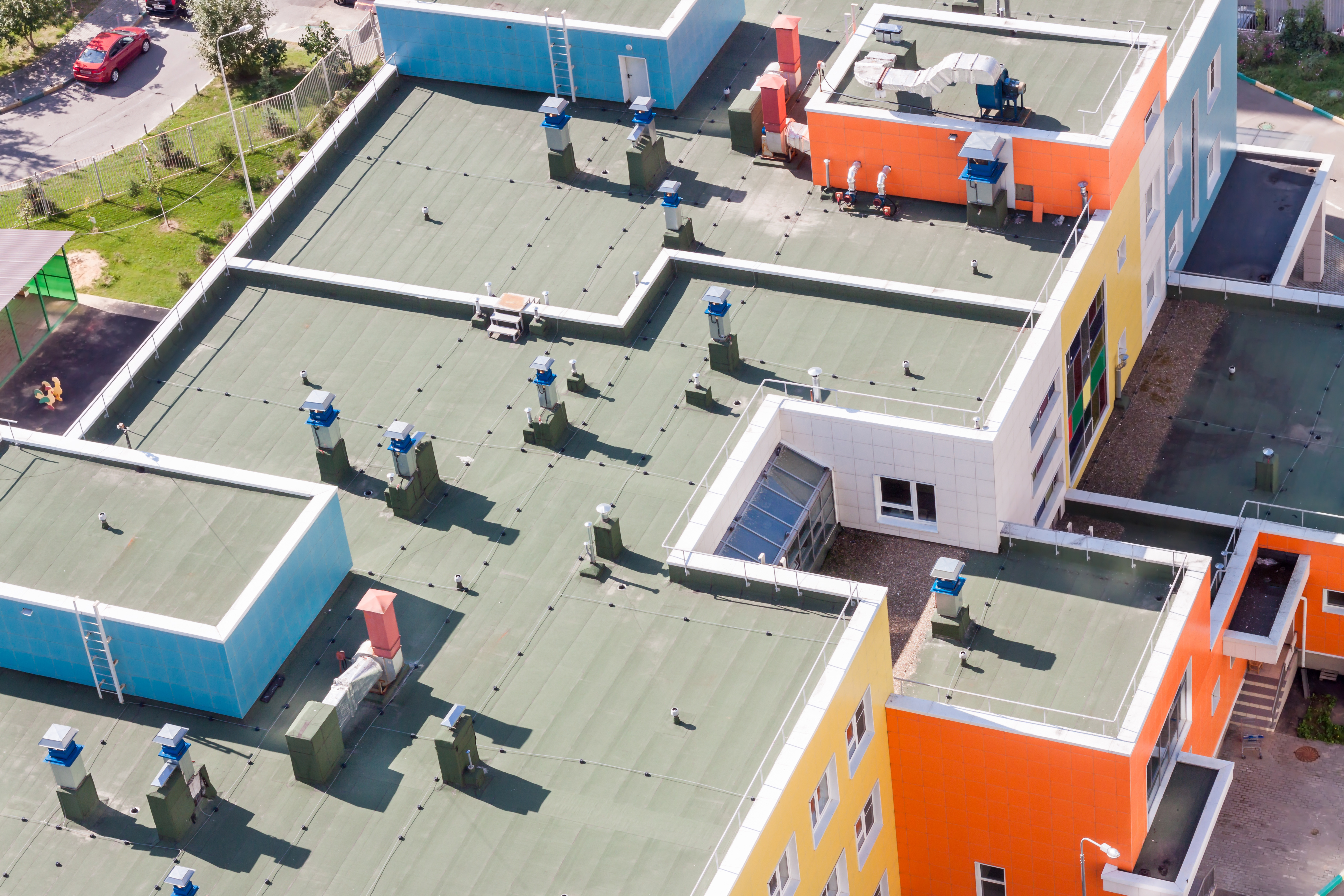
Most commercial roofs are large enough to replace in sections, and that is the single most useful tool for protecting your operations. Instead of opening the whole roof at once, the crew completes one zone at a time: tear-off, deck repair, insulation, and new membrane or panels, all closed up and watertight before moving to the next zone. The areas of your building under finished or untouched sections keep running as normal.
What a well-built phasing plan accounts for:
- Interior sensitivity mapping. Server rooms, food prep areas, medical spaces, and exam rooms get scheduled around, with their roof sections handled during off-hours or closures.
- Watertight stopping points. Each phase ends at a point where the roof can be fully sealed, so an overnight thunderstorm never finds an open deck.
- HVAC and rooftop equipment coordination. Units that need to be lifted or disconnected get scheduled with your facility team so heating and cooling interruptions are brief and announced.
- Noise windows. The loudest work, like tear-off and mechanical fastening, gets assigned to the hours that hurt your operation least.
Honesty matters here, so we will say what most contractors leave out: phasing is not always the right call. On smaller roofs, stretching the project across phases adds mobilization days and cost without meaningful benefit. A compact roof handled by a full crew in one or two days often disrupts you less than a week of partial work. Material choice plays into this too. Single-ply membrane systems on a flat roof replacement install faster than built-up systems, and standing seam panels covered in our guide to commercial metal roofing can cut crew-days on the right structure. Fewer days on site means fewer days of disruption, full stop.
Whether your project runs in phases or in one push, the calendar it runs on deserves just as much thought.
What Should the Scheduling Conversation Cover?
Most articles on this topic tell you to schedule during your off-peak season and move on. That advice is fine, but in North Carolina it is incomplete. Our climate sets real boundaries on when roofing work performs well, and a contractor who ignores them is trading your convenience now for callbacks later.
Summer afternoons in the Triangle bring pop-up thunderstorms that can put an inch of rain on an open deck in twenty minutes, so summer projects need conservative phase sizes and early crew starts. Late August through October carries hurricane remnant risk, which argues for buffer days built into the timeline rather than a schedule with zero slack. Adhesives and sealants also have temperature ranges they cure best in, which makes spring and fall the most forgiving installation windows for many flat systems.
Questions to settle before work is scheduled:
- When is your slow period? Retail slows after the holidays, restaurants between lunch and dinner, offices on Fridays. The work should chase your quiet hours.
- Do nights or weekends actually help? Off-hours work reduces daytime noise but can add labor cost and stretch the total duration. We walk through that tradeoff honestly instead of defaulting to it.
- What do your tenants’ calendars say? A multi-tenant building has multiple busy seasons. Collecting them up front prevents the angry phone call later.
- How much weather buffer is built in? A timeline with no slack is a promise waiting to be broken. Ask any bidder how many weather days their schedule assumes.
“We grew up farming in North Carolina, and farming teaches you one thing fast: you don’t argue with the weather, you plan around it. We bring that same thinking to every commercial schedule we build.” – the team at Skybird Roofing
Once the calendar is set, the next question is what the project looks like on the ground, because the roof is rarely what your customers notice. The parking lot is.
How Do Staging and Access Plans Protect Your Customers?
Material pallets, a dumpster, a crane for a morning, and crew vehicles all need somewhere to live during the project. Where they sit determines whether your customers experience a minor detour or decide to come back another day. A staging plan should be drawn on a site map and agreed to in writing before the first delivery truck arrives.
What the staging and access plan should spell out:
- Protected entrances. Customer and employee doors stay open, with overhead coverage where work happens, and clear signage directing foot traffic.
- Parking math. The plan states exactly how many spaces the project takes and for how long, so you can communicate it instead of apologizing for it.
- Delivery timing. Material drops and crane lifts get scheduled outside your peak traffic hours, so trucks never block your busiest window.
- Debris control. Tear-off material goes from the roof to the dumpster via controlled chutes or hoisting, never tossed, and the lot gets a magnetic sweep for fasteners daily.
- Odor and fume management. Adhesives and certain membrane systems produce odors that can pull into rooftop air intakes. A good plan identifies intakes near each phase and coordinates temporary unit adjustments with your facility team. Almost nobody talks about this one, and it is the complaint we hear most from owners burned on past projects.
A clean site plan only delivers its value if the people in and around your building know about it, which brings us to the last piece.
What Does Good Communication Look Like During the Project?
Confusion creates more disruption than noise does. An employee who did not know the parking lot would be half-closed, or a tenant surprised by tear-off noise over their morning meeting, will remember the project as chaos even if the roof went on perfectly. The fix is simple and cheap: tell people what is coming before it comes.
On our projects, you get one project lead with a direct phone number, not a rotating cast of voices. Before work starts, we provide a plain-language notice you can forward to employees and tenants covering dates, hours, noise expectations, and parking changes. During the project, you get a brief update at the end of each day: what got done, what happens tomorrow, and whether anything changed. If weather shifts the plan, you hear it from us before your tenants hear hammering.
“Surprises are the enemy on a commercial job. If the owner ever has to call us to find out what’s happening on their own roof, we’ve already failed at our job.” – the team at Skybird Roofing
Strong communication habits do not start the day of tear-off. They start at the first inspection, and the owners who fare best are the ones who plan replacement on their terms rather than the roof’s. If your roof is aging but not yet failing, our guide on when to schedule your commercial roof inspection explains how to get ahead of the decision entirely.
Ready to Plan a Replacement That Works Around Your Business?
The Skybird Roofing team plans commercial roof replacements across the Triangle the same way we would want our own business treated: documented up front with a drone inspection, scheduled around your operations and our North Carolina weather, staged to protect your customers, and communicated daily through one point of contact. As a GAF Master Elite certified contractor, a standing earned by fewer than three percent of roofing companies nationwide, we back that process with warranties that protect your investment long after the crew leaves.
If you need help with commercial roofing, call us at 984-833-1223 or contact the Skybird team to schedule a free drone inspection of your commercial roof.