Should You Repair or Replace Your Roof? A Homeowner’s Decision Guide
Jump to a section:
When a roof starts showing signs of trouble, the first question most Triangle-area homeowners ask is whether they need a repair or a full replacement. The answer depends on three variables working together: the roof’s age, the scope of damage, and how the cost of repair compares to the cost of replacement. Getting this decision right protects your home and keeps long-term costs in check. Getting it wrong means either spending money on repairs that won’t hold or replacing a roof years before you need to.
Key Takeaways
- Age and damage scope together determine the right call, not either factor on its own
- Repairs make sense when damage is localized, and the roof has useful life remaining
- Once repair costs approach half the cost of a full replacement, replacement is the better investment
- NC’s climate accelerates shingle wear, so age thresholds that apply in other states may not apply here
- A drone inspection often changes the repair or replacement recommendation by revealing hidden damage not visible from the ground
- Your contractor’s GAF certification status affects whether a repair protects or voids your existing warranty coverage
What Actually Determines Whether You Repair or Replace
Most homeowners focus on the upfront cost when comparing repair and replacement. That is the wrong starting point. A repair that fixes visible surface damage on a roof with failing underlayment or compromised decking will need to be done again, often within a year or two. That turns a “cheaper” repair into a more expensive outcome over time.
The right starting point is scope. A targeted roof repair on a 10-year-old roof with isolated flashing failure is a reasonable call. That same repair on a 22-year-old roof, with granule loss across multiple slopes and soft spots in the decking, is money spent to a problem that keeps growing. Age and the scope of damage together determine whether repair will hold or replacement is the financially sound choice.
“We see homeowners get caught in a cycle of one repair after another because the root issue is a roof that has reached the end of its service life. A repair fixes what you can see. It does not address what is underneath. That is why our inspections look at the full picture before we give a recommendation.” — Jacob Vollmer, owner of Skybird Roofing
What Your Roof’s Age Tells You About Which Direction to Go
Standard guidance puts asphalt shingle lifespans at 25 to 30 years, but that range applies to roofs in moderate climates. North Carolina’s weather puts more stress on roofing systems than most homeowners realize.
Summer heat in the Triangle routinely drives attic temperatures past 140 degrees Fahrenheit when ventilation is inadequate. Combined with the region’s humidity, those conditions accelerate granule loss, blistering, and shingle cracking. Add the late-summer and fall hail patterns common across Wake, Franklin, and surrounding counties, and a shingle roof in this area may reach the end of its service life closer to the 20- to 22-year mark than the 25-year mark you will find in most general guides. The temperature swings that affect Wake Forest roofs are a good example of why local climate knowledge matters when making this call.
How age should shape your thinking:
- Under 15 years old: Repair is likely the right call if the damage is localized. The roof has substantial service life remaining, and a targeted fix addresses the actual problem.
- 15 to 20 years old: The decision depends on what a thorough inspection reveals. Localized damage may still be repairable; widespread wear shifts the math toward replacement.
- The NC Climate: Over the past 20 years, in NC’s climate, replacement is usually the more financially sound choice, even when a repair would technically address the visible damage, because the underlying system is near the end of its service life.
How the Scope of Damage Shifts the Calculation
Localized damage points toward repair: a few missing shingles, failed flashing around a chimney or pipe boot, a small section of cracked decking. The rest of the roof has serviceable life left, and a targeted fix addresses the actual problem without unnecessary cost.
Widespread damage changes the calculation. When shingles are curling, cracking, or losing granules across multiple slopes, or when you are seeing multiple leak points in different areas, the roof’s protective layer is breaking down across the whole system. Repairing one section does not restore the others. You can find a full breakdown of what these warning signs look like in our article on signs your roof needs immediate repair.
A practical threshold used across the industry: when the estimated repair cost reaches 50 percent or more of what a full roof replacement would cost, replacement is the better investment. You spend nearly the same amount but get a full warranty and years of additional service life rather than a temporary fix.
Signs that repair is likely sufficient:
- Localized damage to a single section, one slope, or around one penetration point, such as a pipe boot or chimney
- Shingles in good condition across the majority of the roof surface, with no granule loss or curling on other slopes
- No evidence of moisture in the attic or ceiling below the damaged area
- Roof age under 15 years with no prior major repairs to the same area
Signs that replacement is likely the better path:
- Granule loss, curling, or cracking is visible across multiple slopes rather than one isolated area
- Multiple active or past leak points in different sections of the roof
- Soft spots or sagging that indicate decking damage beneath the shingles
- Repair estimates that grow as more damage is uncovered during the inspection process
“The 50 percent rule is a good starting point, but it is not the whole story. If a repair costs 40 percent of replacement but only buys two years of life on a 22-year-old roof, that is not a good deal. We always factor remaining service life into our recommendation, not just the current repair estimate.” — Jacob Vollmer, owner of Skybird Roofing
When Repair Makes Sense Even on an Older Roof
There are situations where repair is the right short-term call, even when the roof is older or has seen wear across multiple areas.
If you are planning to sell within the next year or two and the roof passes a professional inspection without major structural concerns, a documented repair from a certified contractor may satisfy buyers and their lenders without the expense of a full replacement. Our article on whether a new roof increases your home’s value covers the return on investment for both options in more detail.
If your roof sustained storm damage and an insurance claim is in process, your insurer may require a documented professional repair estimate before approving a full replacement. In that situation, the repair documentation is part of the claim process, not a substitute for eventual replacement.
And if the damage is genuinely isolated and the rest of the roof has substantial life remaining, a repair protects your home at a cost that fits a reasonable budget without overspending on a replacement you do not yet need. Delaying a repair when the roof is already past its useful life has real financial consequences, which our article on the true cost of delaying repairs covers in depth.
What a Thorough Inspection Reveals That Changes the Recommendation
This is where many homeowners get an incomplete picture. A ground-level assessment, even a careful one, misses what is happening beneath the shingles. Moisture that has worked under the surface does not show as visible damage until it has caused significant decking rot or mold growth. By then, what looked like a $600 repair has become a partial or full replacement job.
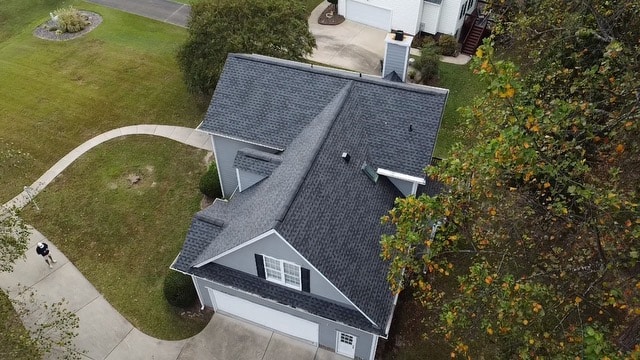
Skybird uses drone inspection technology to assess roofs from angles and distances that a traditional walk-and-probe inspection cannot match. Combined with an attic assessment, this gives us a full picture of where moisture has traveled and how much of the roof structure is affected before we make a repair or replacement recommendation. You can see how this process works in the detailed overview of our drone roof inspection approach.
That matters for the repair-or-replace decision because the answer often changes once subsurface damage is visible. Homeowners who receive repair quotes without a full inspection are comparing costs without comparing scope. A repair that addresses the surface but leaves tracked moisture in the decking will fail, and the next repair will cost more.
How Your Contractor’s Certification Affects Long-Term Value
Not all repairs carry the same warranty protection, and this variable rarely comes up in conversations with contractors.
If your roof was installed by a GAF-certified contractor, it may be covered under a warranty for both materials and workmanship. Repairs completed by a non-certified contractor can affect your ability to make claims on that existing warranty. Skybird holds GAF Master Elite certification, a designation that fewer than 3 percent of roofing contractors in the country qualify for. Repairs we complete preserve your existing warranty coverage. For full replacements, we can activate a GAF System Plus Limited Warranty extending to 50 years.
When comparing repair quotes from multiple contractors, ask each one about their certification status and how their work affects your existing warranty. A lower repair price from an uncertified contractor may cost more in warranty coverage than you save on the invoice. Our roof inspection process includes a review of your existing warranty documentation, so you know where you stand before any work begins.
“Our 25-year workmanship guarantee means that if something goes wrong with a repair we completed, we come back and make it right at no cost to you. That kind of accountability is what homeowners should expect from any contractor they hire. If a company cannot offer a strong labor warranty, that tells you something.” — The team at Skybird Roofing
Frequently Asked Questions About Repair vs. Replacement
Is there a rule of thumb for when to stop repairing and replace instead?
The 50 percent rule is the most widely used guideline: if the cost of repair approaches half what a full replacement would cost, replacement is the better investment. In North Carolina’s climate, that threshold tends to arrive sooner than national guides suggest because of the accelerated wear from heat cycles, humidity, and seasonal hail.
Can a roof repair fix a leak permanently?
A targeted repair that addresses the actual source of a leak, not just the symptom, can hold for years. The key is finding the true source of water entry, which requires a thorough inspection that goes beyond the ceiling stain. Many leaks originate several feet from where the water shows up inside the home.
Should I repair my roof before selling my house?
A documented repair from a certified contractor can satisfy buyers and lenders if the roof otherwise has remaining service life. Whether repair or full replacement makes more financial sense before a sale depends on the roof’s age and condition. A professional inspection gives you the information to make that call before you list.
Does homeowners’ insurance cover repair or replacement?
Homeowners insurance typically covers sudden storm damage, regardless of whether to requires repair or replacement. What your insurer approves depends on the scope of documented damage and your policy terms. A professional inspection with photo documentation, including drone imagery, supports your claim either way.
The Skybird Roofing Team Can Help You Make the Right Call
The repair-or-replace decision comes down to the specifics of your roof: its age, the scope of visible and hidden damage, how the costs compare, and what your contractor’s certification means for your long-term warranty coverage. No general guide can replace a professional inspection.
Skybird Roofing works with homeowners across Wake Forest, Raleigh, Knightdale, Rolesville, Franklinton, and surrounding communities. We use drone inspection technology and hands-on experience with NC’s specific climate to give you an honest assessment and the full picture before you make any decision.
If you are weighing roof repair versus replacement, schedule a free inspection with the Skybird team at skybirdroofing.net/contact-us or call us at 984-833-1223.