The True Cost of Delaying Roof Repairs: What Homeowners Need to Know
Jump to a section:
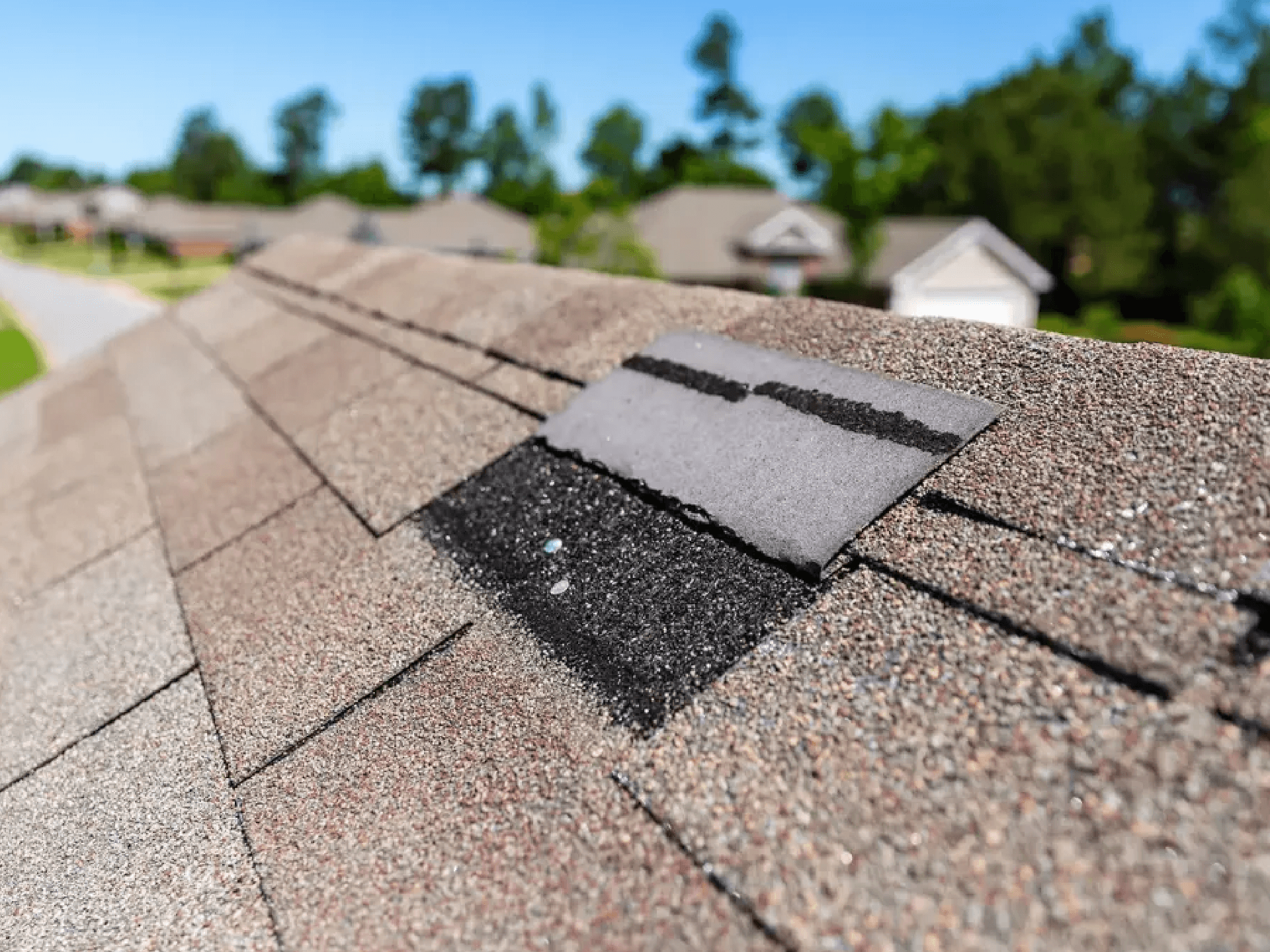
We get it. You’ve spotted a few missing shingles after that last storm, or noticed a small water stain on your ceiling that only appears during heavy rain. The quote for repairs seems manageable, but there are a dozen other expenses competing for your attention right now. It’s tempting to add roof repairs to the “deal with it later” list and move on with your busy life. But here’s the uncomfortable truth that Triangle homeowners need to hear: delaying roof repairs doesn’t save you money—it costs you exponentially more in the long run.
At Skybird Roofing, we respond to emergency calls every week from Raleigh-area homeowners who wish they’d acted sooner. What started as a $300 shingle replacement has become a $5,000 water damage remediation project. That small leak that seemed manageable has spread rot through roof decking, destroyed insulation, created mold problems, and damaged interior ceilings and walls. The pattern repeats itself constantly: minor issues ignored become major catastrophes that drain bank accounts and create stress that could have been completely avoided.
This isn’t meant to scare you—it’s meant to empower you with honest information about what really happens when roof problems go unaddressed. Understanding the true costs of delay helps you make smart decisions that protect both your home and your wallet.
The Escalation Timeline: How Small Problems Become Expensive Disasters
Roof damage doesn’t stay static—it’s an active, accelerating process that compounds with time. Understanding this timeline helps illustrate why “waiting a few months” to address problems can multiply your costs tenfold. Here in the Triangle, where heat, humidity, and storms create ideal conditions for damage progression, this escalation happens even faster than in more moderate climates.
In the first 24 hours after water penetrates your roof, damage begins silently. That initial breach—whether from missing shingles, damaged flashing, or cracked materials—allows moisture to reach your underlayment and roof decking. If the leak occurs during a storm and you don’t immediately notice it, water starts saturating wooden components. Your roof deck begins absorbing moisture, and insulation in your attic becomes damp. At this stage, you might not see any interior damage yet, but the clock is ticking and deterioration has started.
Within the first week, visible signs typically emerge if the leak is active. Water stains appear on ceilings as moisture travels through insulation and drywall. Your attic insulation loses effectiveness as it becomes compressed and saturated—wet insulation provides almost no thermal resistance, causing your energy bills to climb. Wooden roof decking that remains damp begins the early stages of rot, though it may not yet show obvious structural weakness. If you catch the problem at this point and address it immediately, you’re looking at relatively minor repair costs—perhaps $200 to $800 depending on the issue.
“The homeowners who end up with the most expensive repairs are almost always the ones who noticed a problem early but convinced themselves it wasn’t urgent. By the time they call us, what could have been a $400 repair has become a $4,000 emergency involving structural work, mold treatment, and interior restoration.” – Team at Skybird Roofing
Between one and four weeks, damage accelerates significantly. Mold begins forming in damp areas—it takes just 24 to 48 hours for mold spores to establish colonies in moisture-rich environments. Your attic becomes a breeding ground for mold that spreads to insulation, wooden framing, and any stored items. The rotting process in wooden decking and rafters progresses from surface deterioration to structural compromise. Water stains on ceilings grow larger and darker with each rain event, and paint begins bubbling or peeling. Interior drywall weakens as it absorbs moisture repeatedly. At this point, you’re no longer looking at simple roof repair—you need mold remediation, insulation replacement, potential decking work, and interior ceiling repairs. Costs have jumped to $1,500 to $5,000 or more.
After one to three months of neglect, you’ve crossed into serious structural concern territory. Rot has significantly weakened roof decking and potentially spread to rafters and support beams. Compromised wood loses load-bearing capacity, creating sag in your roofline or ceilings. Mold has spread throughout your attic and potentially into wall cavities where it’s invisible but continues growing and deteriorating materials. Your insulation is destroyed and needs complete replacement. Water damage has likely spread to interior walls, especially if the leak is near exterior walls where moisture travels downward. Electrical wiring in your attic faces moisture exposure, creating fire and shock hazards. You’re now looking at $5,000 to $15,000 or more in comprehensive repairs involving structural work, extensive mold remediation, complete insulation replacement, electrical safety assessment, and significant interior restoration.
Beyond six months, you’re in full crisis mode. Structural damage may be extensive enough to require engineering evaluation and permits for major repairs. Load-bearing components may need replacement. Mold has proliferated throughout multiple areas of your home, requiring whole-house remediation that can cost $10,000 to $30,000 alone. Your ceiling may have collapsed or be at imminent risk of collapse. Foundation issues may have developed as water infiltrated walls and pooled around your home’s base. Insurance companies may deny claims, arguing that the damage resulted from long-term neglect rather than a covered event. You’re potentially looking at $20,000 to $50,000+ in total costs—or even complete roof replacement years before it would have otherwise been necessary.
Damage Escalation Timeline:
- 0-24 Hours: Water penetrates roof deck and begins saturating underlayment; insulation becomes damp; no visible interior damage yet
- 1-7 Days: Ceiling stains appear; insulation effectiveness drops; wood begins softening; energy costs increase; repair costs: $200-$800
- 1-4 Weeks: Mold colonies establish; wood rot progresses; paint bubbles; drywall weakens; repair costs escalate to $1,500-$5,000+
- 1-3 Months: Structural wood significantly weakened; widespread mold growth; insulation destroyed; electrical hazards present; costs: $5,000-$15,000+
- 6+ Months: Major structural compromise; whole-house mold remediation needed; potential ceiling collapse; possible insurance denial; costs: $20,000-$50,000+
Cost Comparison: Immediate Repair vs. Delayed Action
| Repair Scenario | Timeline | Work Required | Typical Cost Range | Total Cost with Delays |
|---|---|---|---|---|
| Missing Shingles (Immediate) | Caught same week | Replace 3-8 shingles | $200-$500 | $200-$500 |
| Same Issue (1 Month Delay) | After several rain events | Shingles + deck patch + interior paint | $800-$1,500 | $800-$1,500 (3x more) |
| Same Issue (3 Month Delay) | Ignored full season | Deck replacement + mold + insulation + drywall | $3,000-$7,000 | $3,000-$7,000 (10-15x more) |
| Small Flashing Leak (Immediate) | Detected early | Reflash chimney or vent | $300-$700 | $300-$700 |
| Same Leak (2 Month Delay) | Multiple storms pass | Flashing + deck repair + attic mold treatment | $2,000-$4,000 | $2,000-$4,000 (5-6x more) |
| Same Leak (6 Month Delay) | Ignored through season | Major deck work + full mold remediation + insulation + interior repair | $8,000-$15,000 | $8,000-$15,000 (20-25x more) |
| Storm Damage (Immediate) | Repaired within 2 weeks | Replace damaged section + flashing | $800-$1,800 | $800-$1,800 |
| Same Damage (4 Month Delay) | Several weather cycles | Structural repairs + extensive interior work | $6,000-$12,000 | $6,000-$12,000 (7-10x more) |
Hidden Costs Beyond the Repair Bill
When Triangle homeowners calculate whether they can afford to delay repairs, they typically only consider the direct repair costs. But the true financial impact extends far beyond what your roofing contractor charges. These hidden costs often exceed the actual repair expenses, creating financial burdens that catch homeowners completely off guard.
Mold remediation represents one of the most expensive hidden costs of delayed roof repairs. Once mold establishes itself in your attic or walls, you can’t simply patch the roof and call it done—professional mold remediation becomes legally and practically necessary before completing repairs. Mold removal isn’t a DIY project. Professional mold remediation requires containment of affected areas to prevent spore spread, HEPA filtration systems to clean air, removal and disposal of contaminated materials like insulation and drywall, treatment of wooden framing with antimicrobial solutions, and verification testing to ensure complete removal. For attic mold from roof leaks, expect costs between $1,000 and $7,000 depending on extent. Whole-house mold remediation when growth has spread through multiple areas runs $10,000 to $30,000. These costs come on top of your actual roof repairs, structural fixes, and interior restoration work.
Energy efficiency losses hit your wallet every single month that damage goes unaddressed. Wet or damaged insulation loses virtually all its insulating value—saturated fiberglass or cellulose insulation compresses and becomes about as effective as having no insulation at all. This forces your HVAC system to work overtime compensating for the lost thermal resistance. In Raleigh’s hot, humid summers, damaged roof insulation can increase cooling costs by 20-40% or more. During winter months, heat escapes through compromised areas, driving up heating expenses. Air leaks through damaged areas create additional energy waste. A homeowner with $200 monthly summer cooling bills might see that jump to $280-$320 with compromised attic insulation. Over a six-month cooling season, that’s an extra $480-$720—money literally evaporating through your damaged roof while the underlying problem continues worsening.
“Homeowners are always shocked when we show them their energy bills from before and after their roof problems started. They’ve been bleeding an extra $50 to $100 monthly for months without realizing the roof leak was the culprit. That’s money you’ll never get back, on top of the repair costs you still have to pay.” – Team at Skybird Roofing
Interior damage costs multiply rapidly as water finds new places to go. What starts as a ceiling stain becomes destroyed drywall requiring replacement—$1,200 to $3,000 for ceiling and wall drywall work. Water travels down walls, destroying paint, wallpaper, and trim—$500 to $2,000 for interior painting and trim restoration. Flooring underneath leaks becomes damaged, especially hardwood, carpet, or laminate that doesn’t handle moisture well—$1,500 to $5,000+ for flooring replacement in affected areas. Stored belongings in attics or affected rooms suffer water damage—family heirlooms, holiday decorations, documents, electronics—with losses potentially worth thousands that insurance may not cover if deemed neglect. Furniture and belongings in rooms below leaks face damage from water dripping or ceiling collapse. These interior losses add up quickly and come entirely on top of the roof repair costs that were deferred.
Structural repair costs explode when water damage progresses beyond roof decking. Rotted rafters or roof framing requiring sister beam installation or complete replacement run $2,000 to $8,000 depending on extent. Load-bearing wall damage from water infiltration costs $3,000 to $10,000+ to repair properly with engineering and permits. Foundation damage from water pooling around your home’s perimeter requires $5,000 to $15,000+ for professional foundation repair. Ceiling joist replacement when water damage spreads to structural ceiling components costs $2,500 to $7,000. At this stage, you’re no longer dealing with roofing contractors alone—you need structural engineers, foundation specialists, and general contractors, all charging premium rates for emergency structural work.
Insurance complications create additional financial and legal headaches. Many homeowners assume their insurance will cover damage when they finally decide to address it. But insurance policies specifically exclude damage resulting from deferred maintenance or long-term neglect. If your adjuster determines that the damage worsened because you failed to address known problems promptly, your claim may be partially or fully denied. Even if covered, deferred damage often exceeds your deductible significantly, leaving you with major out-of-pocket expenses. Some policies require timely notification of damage—if you wait months to file a claim for storm damage, the insurance company may argue you missed your reporting window. Claims denials for deferred maintenance are becoming increasingly common as insurers crack down on preventable losses.
Home value impacts hurt your largest financial asset. Undisclosed roof damage discovered during home inspections torpedoes sales and invites lawsuits. Buyers routinely demand price reductions of $5,000 to $20,000+ when inspections reveal roof problems and related damage. Many buyers simply walk away when they discover roof issues, particularly if there’s evidence of mold, structural damage, or long-term neglect. Disclosure laws require you to inform potential buyers of known defects—failing to disclose roof problems opens you to legal liability if buyers discover issues after purchase. Even after repairs, buyers may remain skeptical and offer less than asking price. Your home’s most valuable asset becomes a liability that costs you tens of thousands in lost equity.
Hidden Cost Categories from Delayed Repairs:
- Mold Remediation: $1,000-$7,000 for attic mold; $10,000-$30,000 for whole-house treatment; requires professional containment and removal
- Energy Efficiency Losses: 20-40% increase in HVAC costs monthly; $50-$150+ extra per month for 6-12 months equals $600-$1,800 wasted
- Interior Restoration: $1,200-$3,000 drywall replacement; $500-$2,000 painting/trim; $1,500-$5,000+ flooring damage
- Structural Repairs: $2,000-$8,000 rafter replacement; $3,000-$10,000 wall framing; $5,000-$15,000+ foundation work
- Insurance Deductibles & Denials: $1,000-$5,000 deductible even if covered; potential full claim denial for neglect-related damage
- Damaged Belongings: Irreplaceable family items, stored possessions, furniture worth $1,000-$10,000+ often not covered by insurance
- Lost Home Value: $5,000-$20,000+ buyer price reductions; failed sales costing months of carrying costs; potential legal liability
- Emergency Service Premiums: 50-100% upcharges for after-hours emergency repairs when problems finally become critical
The North Carolina Climate Factor: Why Delays Cost More Here
If you’re thinking “I can wait a few months and deal with this in spring,” you need to understand how the Triangle’s climate accelerates damage in ways that don’t happen in drier or more moderate regions. Our combination of intense heat, high humidity, severe thunderstorms, and temperature fluctuations creates perfect conditions for rapid damage progression. What might stay manageable for six months in Arizona or Colorado becomes catastrophic in half that time here in North Carolina.
Our summer heat and humidity create ideal conditions for rapid deterioration. When temperatures soar into the 90s with heat indices exceeding 100°F, your roof surface can reach 160-170°F. This extreme heat causes any moisture in your roof system to create a virtual sauna effect in your attic. Humidity levels regularly exceed 70% during summer months, providing the moisture that mold needs to thrive. The combination of heat and humidity accelerates rot in wooden components exponentially faster than in dry climates. Mold can establish viable colonies within 24-48 hours in our climate, compared to several days or longer in drier regions. Organic materials like wooden decking and rafters deteriorate 2-3 times faster in humid conditions. If you delay repairs during summer, you’re essentially putting damage progression into overdrive.
Severe weather cycles compound problems relentlessly. The Triangle experiences multiple severe thunderstorm events each summer, with each storm driving more water through existing damage points. Wind-driven rain forces water into cracks and gaps that might not leak during gentle rainfall. Hail events that seem minor at first cause bruising and granule loss that accelerates deterioration over subsequent months. Each storm cycle—roughly every 7-14 days during active weather periods—gives water another opportunity to penetrate, spread, and cause additional damage. A small leak that lets in a cup of water per storm becomes gallons of water over a season. That repeated wet-dry cycling causes materials to expand and contract, opening cracks wider and allowing even more water intrusion in the next storm.
“Triangle homeowners need to understand that our climate doesn’t give you the luxury of waiting. What takes a year to become serious in Colorado takes three months here. Every storm between when you notice a problem and when you fix it exponentially increases the final repair bill.” – Team at Skybird Roofing
Freeze-thaw cycles during winter months create unique damage patterns. While we don’t experience the extreme winter weather of northern states, our temperatures frequently fluctuate above and freezing throughout winter. Any moisture that’s penetrated your roof system during fall storms remains trapped in materials. When temperatures drop below freezing, that moisture expands as it turns to ice. Water expands approximately 9% when freezing, forcing apart shingle layers, cracking underlayment, and widening gaps in flashing. During the day, temperatures rise above freezing and ice melts, allowing even more water to infiltrate the newly expanded cracks. This freeze-thaw cycle repeats dozens of times each winter in the Triangle, progressively worsening any existing damage. Small cracks become significant openings; minor leaks become major water intrusion points.
Tropical weather systems bring intense rainfall that overwhelms compromised roofs. While direct hurricane hits are rare in the Triangle, tropical storms and hurricane remnants pass through regularly, bringing 4-8 inches or more of rainfall in 24-48 hours. These extreme rain events test every vulnerable point in your roofing system. A small leak that seems tolerable during normal thunderstorms becomes a cascading failure during tropical rainfall. We’ve responded to countless emergency calls after tropical systems where homeowners who’d been “monitoring” small leaks discovered catastrophic water intrusion when intense rainfall finally overwhelmed their compromised roof. The damage from a single tropical event can equal or exceed what months of normal storms would cause.
High winds throughout the year target any weakness in your roof. The Triangle experiences high wind events regularly—not just during storms but during seasonal weather transitions. Spring and fall bring sustained winds of 25-40 mph with gusts to 50-60 mph or higher. These winds get underneath any lifted shingles, loose flashing, or damaged areas, progressively working them further loose. Each high-wind event weakens compromised areas more, expanding the damage zone. What starts as two or three lifted shingles becomes ten or fifteen as wind progressively peels back more material from the weakened starting point. You can’t “wait for calmer weather” to address wind damage in the Triangle—there’s always another wind event coming within days or weeks that will make existing damage worse.
Climate-Specific Damage Accelerators in the Triangle:
- Heat & Humidity: 90°F+ temps with 70%+ humidity create ideal mold growth conditions; rot progresses 2-3x faster than dry climates
- Frequent Severe Storms: Thunderstorms every 7-14 days during active seasons; each storm drives more water through existing damage
- Freeze-Thaw Cycles: 20-40 freeze-thaw cycles per winter expand cracks and gaps progressively; ice expansion forces materials apart
- Tropical Systems: 4-8+ inches of rainfall in 24-48 hours overwhelms compromised areas; intensity reveals every weakness
- High Wind Events: Spring and fall winds of 40-60 mph target lifted shingles and loose flashing; progressively peel back compromised areas
- UV Radiation Intensity: Summer sun breaks down exposed roofing materials rapidly; damaged areas deteriorate faster under direct exposure
- Temperature Fluctuations: Daily swings of 30-40°F cause thermal expansion/contraction that widens existing cracks and separations
- Extended Rainy Seasons: March-May and July-September bring weeks of frequent rainfall; materials never fully dry between events
Insurance Implications: Why Waiting Can Cost You Coverage
One of the most expensive misconceptions Triangle homeowners hold is that their insurance will cover damage whenever they finally decide to address it. The reality is far more complex and financially risky. Understanding how insurance companies view delayed repairs can mean the difference between having your claim covered and facing complete denial—leaving you responsible for tens of thousands in repair costs.
Insurance policies universally exclude damage from deferred maintenance and neglect. Your policy covers sudden, unexpected events—storms, falling trees, hail damage. It doesn’t cover deterioration that occurs because you failed to maintain your property or address known problems promptly. If an adjuster determines that you were aware of roof damage and chose not to repair it, allowing subsequent damage to occur, that subsequent damage qualifies as neglect and won’t be covered. The original damage might still be covered, but all the escalated problems—the mold, the structural damage, the interior water damage—that developed because you delayed repairs are your responsibility.
Proving when you became aware of damage creates significant challenges. Insurance companies investigate claims thoroughly, especially expensive ones. They’ll review your service records, interview contractors who provided estimates, check if you had inspections done, and analyze damage patterns to determine timeline. If you got a roofing estimate six months ago but didn’t proceed with repairs, then filed a claim when things got worse, the insurer will argue you were aware of the problem and chose not to address it. Even without documentation, severe damage spread indicates the problem existed for extended periods. Adjusters are trained to identify long-term water damage versus recent acute events—rotted wood, extensive mold growth, and deteriorated materials tell a clear story of neglect.
“We’ve seen insurance companies deny six-figure claims because homeowners waited too long to report and repair storm damage. The storm damage itself was covered, but everything that happened in the eight months they waited—all the mold, rot, structural problems—was ruled maintenance neglect. Don’t let this happen to you.” – Team at Skybird Roofing
Timely notification requirements appear in virtually all policies. Most homeowners insurance requires you to report damage within specific timeframes—typically 30-60 days after you discover it or after a covered event occurs. If you notice storm damage in June but don’t file a claim until December, the insurance company may deny the claim entirely based on late notification, arguing that the delay prevented them from properly investigating the original damage. Some policies contain even stricter language requiring “prompt” notification without defining specific days, giving insurers broad latitude to deny claims for delayed reporting. Even if you haven’t made repairs yet, you should notify your insurance company of potential damage immediately after storms to preserve your rights.
Compounding damage creates coverage nightmares. Let’s say hail damages your roof in April, causing minor leaks. You notice but decide to wait. By October, you have extensive water damage, mold, and structural problems. The insurance adjuster determines that the original hail damage would have cost $8,000 to repair. The current total damage requiring $35,000 in repairs breaks down to $8,000 original damage (covered) plus $27,000 in subsequent problems from the unrepaired leak (not covered). You’re left with a $27,000 bill plus your deductible on the covered portion. The insurance company argues—rightly under policy terms—that you could have prevented 77% of the damage by addressing the original problem promptly.
Documentation becomes your best protection. If you notice damage, document it immediately with dated photos and videos from multiple angles. File a claim or at minimum notify your insurance company in writing that damage has occurred. Get professional inspections that create dated written records of damage extent. Save all estimates and correspondence with contractors. If you can’t afford immediate repairs, this documentation proves you acted responsibly by reporting damage even if financial circumstances prevented immediate action. Insurance companies treat documented, reported damage far more favorably than undocumented problems that homeowners claim they “just noticed” despite evidence of long-term neglect.
Emergency repairs and temporary protection preserve coverage. If storm damage occurs and you can’t complete permanent repairs immediately, professional emergency services like tarping protect both your home and your insurance rights. Most policies require you to take reasonable steps to prevent further damage—failing to protect your home after a known event can void coverage for subsequent damage. Emergency tarping typically costs $500-$1,500 and is usually covered under your policy, and it protects you from the much larger costs of continued water intrusion while permanent repairs are scheduled. This shows the insurance company you acted responsibly to mitigate damage.
Insurance Complications from Delayed Repairs:
- Maintenance Neglect Exclusions: Damage resulting from failure to repair known problems excluded from coverage; can deny 50-90% of claim value
- Late Notification Denials: Most policies require 30-60 day reporting window; delays beyond this can void entire claim regardless of validity
- Compounding Damage Denials: Original covered damage separated from subsequent neglect-related damage; homeowner pays for escalated problems
- Evidence of Prior Knowledge: Adjusters investigate service records, estimates, and damage patterns to prove homeowner awareness and delay
- Failure to Mitigate Clauses: Policies require reasonable steps to prevent further damage; not tarping or protecting after known damage voids coverage
- Increased Deductibles: Even when claims are approved, deductibles apply; years of damage can push total costs well beyond deductible amounts
- Policy Non-Renewal Risks: Multiple claims or evidence of poor maintenance can result in policy cancellation or non-renewal
- Diminished Coverage Amounts: Adjusters may reduce payouts based on estimated percentage attributable to neglect versus covered event
When “Just a Little Longer” Becomes Never Affordable
One of the saddest patterns we see at Skybird Roofing involves homeowners who genuinely intended to make repairs but kept postponing them until the costs became completely unaffordable. They started with a manageable $800 repair quote. Months later, that repair has escalated to $12,000 or more—an amount they simply cannot come up with, even with financing. Now they’re trapped in a devastating cycle where the only “solution” is to continue delaying while problems worsen further, home value plummets, and living conditions deteriorate.
The affordability trap works like this: You get a quote for $1,200 to fix flashing and replace some damaged shingles. It’s not in the budget right now, so you decide to wait three months until you’ve saved up. Three months later, the problem has worsened—now the quote is $3,500 because water damage has spread to decking and insulation. That’s more than you’ve saved, so you postpone again. Six months after the original quote, you’re looking at $8,000-$12,000 in comprehensive repairs. At this point, the cost has escalated beyond what many families can afford even with available credit. The home needs major work, but financing isn’t possible, savings are insufficient, and insurance has denied the claim due to maintenance neglect. You’re stuck.
Financing becomes harder as costs escalate. A $1,500 repair might go on a credit card or come from savings. A $15,000 emergency repair often requires a home equity line, personal loan, or contractor financing—options that aren’t available to everyone, especially if your credit isn’t perfect or you lack sufficient equity. Many homeowners discover too late that they’ve waited until the repairs exceed their financial capacity to address them through any available means. At that point, selling becomes difficult because buyers won’t purchase a home with obvious major problems, and you can’t afford to fix the issues to make the home sellable. You’re financially trapped in a deteriorating property.
“We’ve had families in tears because they waited until a $600 repair became $18,000 worth of damage they can’t possibly afford. At that point, there are no good options—only expensive and more expensive ones. Please don’t let this happen to you. Whatever sacrifices it takes to address repairs when they’re small and manageable is worth it.” – Team at Skybird Roofing
Living conditions deteriorate while you’re trapped. Families continue living in homes with active leaks, mold growth, and structural problems because they can’t afford the escalated repair costs and can’t sell without making repairs. Children and elderly family members face health risks from mold exposure. Belongings continue sustaining damage with each rain event. The stress of living in a deteriorating home while financially unable to address it takes tremendous psychological toll. What could have been avoided with a manageable repair at the right time has become a crisis affecting every aspect of daily life.
The only solution becomes selling at a loss or walking away. Some homeowners ultimately accept massive price reductions—$20,000, $30,000, or more below market value—to sell their home with known major problems to investors who buy distressed properties. This loss might equal or exceed what the proper repairs would have cost. In extreme cases, particularly when values drop below mortgage balances, some homeowners face foreclosure or strategic default because they cannot afford repairs, cannot sell, and cannot continue maintaining an unlivable property. These are worst-case scenarios, but they occur with disturbing regularity in situations where minor problems were repeatedly postponed until they became insurmountable crises.
Prevention is always, always cheaper than correction. This bears repeating because it’s the core truth that separates homeowners who protect their investments from those who lose them. A $400 repair addressed today prevents a $4,000 repair next year. A $1,000 investment in roof maintenance saves $10,000 in emergency restoration work. There is never a scenario where delaying necessary repairs saves you money—the arithmetic simply doesn’t work that way. Every day you wait, the damage is actively progressing, the costs are increasing, and your options are narrowing. Whatever financial creativity or sacrifice it takes to address problems when they’re small and manageable will always cost less than dealing with catastrophic failure later.
Financial Reality Checks:
- Manageable Repair Range: $200-$1,500 repairs fit most family budgets with planning; credit cards or savings typically sufficient
- Challenging But Possible Range: $1,500-$5,000 requires financing but usually accessible through home equity, personal loans, or contractor financing
- Severe Financial Strain Range: $5,000-$15,000 pushes limits of available credit for many families; may require difficult financial choices
- Potentially Unaffordable Range: $15,000+ exceeds financial capacity for significant percentage of homeowners; may force sale or default
- The Core Truth: Every week of delay moves your costs upward through these ranges; act while repairs remain in affordable territory
Key Trends & Strategic Actions:
| Key Trend | Strategic Action for Homeowners |
|---|---|
| Damage escalates exponentially with time | Address all roof problems within 2-4 weeks of discovery; never delay beyond 30 days even if finances are tight |
| Hidden costs exceed direct repair expenses | Calculate total cost including mold, energy losses, interior damage, and insurance implications when deciding whether to delay |
| Triangle climate accelerates damage 2-3x faster | Understand regional time compression; what takes 6 months elsewhere takes 2-3 months here due to heat/humidity/storms |
| Insurance excludes neglect-related damage | Document and report all damage immediately; file claims within 30 days; get emergency tarping to show mitigation efforts |
| Delays create affordability traps | Secure financing or use credit cards for manageable repairs before costs escalate beyond financial capacity |
| $300 repairs become $3,000-$15,000 problems | Accept that immediate action, even if inconvenient, costs 90% less than delayed response to escalated damage |
| Prevention always cheaper than correction | Schedule biannual inspections ($200-400) to catch problems at $200-800 repair stage rather than $5,000-15,000 crisis stage |
| Mold develops within 24-48 hours | Treat all water intrusion as emergency requiring immediate temporary protection and scheduled permanent repair within days |
Conclusion: Protecting Your Home and Wallet with Skybird Roofing
The evidence is overwhelming and the math is unforgiving: delaying roof repairs never saves money—it only transfers small, manageable expenses into large, potentially catastrophic ones. Every day you wait after discovering roof problems, damage is actively spreading through your home’s structure, costs are multiplying, insurance coverage is becoming more questionable, and your options are narrowing. The question isn’t whether to address roof problems—it’s whether you’ll do so when repairs cost hundreds or wait until they cost tens of thousands.
At Skybird Roofing, we partner with Triangle homeowners to address roof problems while they’re still manageable and affordable. We understand that roofing emergencies don’t respect your budget or timing—they happen when they happen. That’s why we offer flexible scheduling, work directly with insurance companies to maximize your covered repairs, and provide honest assessments that help you make informed decisions. We’ll never recommend a full replacement when targeted repairs will suffice, but we’ll also give you straightforward guidance about what problems demand immediate attention versus what can be scheduled for the near future.
Our team responds quickly to emergency calls because we understand that same-day tarping and temporary protection can save you thousands in subsequent damage. We document everything thoroughly with photos and detailed reports that support insurance claims and create records of timely action. Our comprehensive approach addresses not just the immediate roof problem but related concerns like ventilation, flashing, and potential future vulnerabilities—helping you avoid the next emergency before it occurs.
Don’t let fear of repair costs trap you in the cycle of delay and escalation. The absolute worst financial decision you can make is postponing necessary roof repairs hoping the problem will somehow become more affordable later. It won’t. Physics, weather, and mathematics guarantee that every week you wait makes the final bill exponentially larger. Whatever it takes—financing, credit cards, payment plans, temporarily adjusting other expenses—addressing roof problems immediately while they’re small will always, always cost less than dealing with the catastrophic failure that results from delay.
If you’ve noticed any warning signs, received estimates for repairs you’ve been postponing, or simply haven’t had your roof inspected in over a year, now is the time to act. Contact Skybird Roofing today for a comprehensive inspection and honest assessment of your roof’s condition. We’ll identify any existing problems, provide transparent cost estimates, work with your insurance company if damage is covered, and help you understand exactly what needs to be addressed and what timeline makes sense. Don’t wait until a manageable repair becomes an unaffordable crisis—protect your home, your family, and your financial security by addressing roof problems while they’re still small and manageable.
The most expensive roof repair is always the one you postpone. Let Skybird Roofing help you avoid that costly mistake.