What to Expect During a Professional Roof Replacement
Jump to a section:
A roof replacement moves quickly once it starts. Most Triangle-area homes go from tear-off to finished installation in 1 to 2 days. What homeowners often do not expect is that the most consequential work happens in the layers nobody ever sees once the shingles go on – and that a few specific moments during the job deserve their full attention before they sign off. This guide walks through each phase from the homeowner’s side, including the decisions you may need to make mid-job and what a properly completed installation looks like.
Key takeaways from this article:
- Materials and the dumpster typically arrive the day before installation; moving vehicles and preparing the property in advance avoids complications on job day.
- The deck assessment after tear-off can uncover hidden damage; your contractor should document it and get your approval before proceeding.
- The drip edge, ice and water shield, and underlayment installed before any shingles are placed protect your home against water intrusion in the long term.
- Flashing around chimneys, vents, and valleys is where most leaks begin when it is done poorly; verify that it is replaced, not reused.
- Drone documentation after installation creates a warranty-defensible baseline record for future insurance claims and warranty transfers.
- A permit, a final walkthrough, and written warranty documentation are non-negotiable on any professional job.
What to Do Before the Crew Arrives
The day before installation, expect two deliveries: roofing materials staged on the roof or driveway, and a dumpster placed close to the work area. If you have a preference for where the dumpster lands relative to your landscaping or gate access, communicate that to your contractor a day in advance rather than on the morning of the job.
How to prepare your property before installation day:
- Move vehicles out of the driveway. Falling debris, shingle bundles being carried off the roof, and the general movement of a working crew all pose a risk to any car within range of the work zone.
- Make arrangements for pets. Roof replacement is loud, and the crew will move around the full perimeter of your home throughout the day. Dogs that react to strangers will struggle with this, and the activity makes containment difficult.
- Clear the area around the exterior perimeter. Patio furniture, potted plants, and outdoor equipment can be damaged by falling debris and should be moved away from the house.
- Cover items in the attic. Vibration from tear-off can dislodge items on shelving, and small debris can occasionally fall through gaps at penetrations or skylights.
You do not need to be home for installation day. A professional crew manages the job independently and should be able to reach you by phone if a decision comes up mid-job.
Tear-Off: What It Reveals and Why It Matters
Tear-off is the loudest phase. The crew removes all existing shingles, underlayment, and flashing down to the roof decking, loading debris into the dumpster from above. On most Triangle-area homes, tear-off wraps up within a few hours.
Once the deck is exposed, the crew can see what the shingles were covering. This is the moment that sometimes brings surprises — soft spots, rot at the eaves, or sections of sheathing that have absorbed moisture over time. Finding damaged decking mid-job is not a reason for a contractor to add charges. It is the nature of the work: you cannot know what is underneath until it is uncovered.
“We always tell homeowners before we start: there may be soft spots or rotten sections we cannot see until the old roof comes off. What matters is how we handle it. We document what we found with photos, call before we proceed, and get approval before we replace anything. No surprises on the final invoice.” — Jacob Vollmer, owner of Skybird Roofing
Decking replacement is not optional if the damage is structural. A GAF Master Elite installation requires the roofing system to go over a structurally sound deck. Skipping damaged sections to speed up the job voids the warranty precisely when you need it most.
The Layers That Go on Before a Single Shingle Is Placed
Most homeowners think of the shingles when they picture a roof replacement. The shingles are what your roof is made of. The layers installed before them are what your roof actually does. A crew that rushes this phase compromises the entire system regardless of what brand of shingle goes on top.
What is installed before shingle installation begins:
- Drip edge. A metal strip applied along the eaves and rakes that directs water away from the fascia board and into your gutters. Without it, water works back under the shingles along the edge and accelerates wood rot on the fascia.
- Ice and water shield. A self-adhering waterproof membrane applied at the eaves and in the valleys — the two areas most exposed to ice damming in winter and high-volume water in summer storms. In North Carolina, where temperature swings between seasons are significant, this layer gets tested regularly. See our detailed overview of how ice and water shield works and where it belongs on your roof.
- Synthetic underlayment. Rolled across the remaining deck surface as a secondary moisture barrier between the shingles and the wood below. Synthetic underlayment resists tearing and holds up longer than felt-based alternatives, which is why it is included as standard on every Skybird installation.
- Flashing. Metal pieces are installed around chimneys, vents, skylights, and along roof transitions where two planes meet. Old flashing that is reused rather than replaced is one of the most common sources of leaks on recently replaced roofs.
“Flashing is where we see most of the leaks on roofs that were replaced by someone else. The shingles look fine from the street, but the contractor left the old step flashing in place around the chimney or the pipe boots on the vents. We replace every piece of flashing on every job because that is the only way to stand behind the work.” — The Team at Skybird Roofing
Shingle Installation and What to Watch During the Job
Shingle installation starts from the bottom of the roof and works upward. Starter shingles go along the eave line first, followed by field shingles in staggered rows, finished with ridge cap shingles along the peak. Ridge vents are installed as part of the ridge cap phase, so if your contractor has not mentioned attic ventilation in the scope, ask before installation begins. A new roof installed over an inadequate ventilation system shortens shingle life and can void manufacturer coverage.
On a typical NC Triangle home, a full crew completes shingle installation in a single day. Skybird schedules morning starts specifically to get the roof weather-tight ahead of North Carolina’s afternoon storm patterns in summer — a timing consideration that less-experienced crews often skip.
Things worth noting during installation:
- Nailing placement. Every shingle has a designated nailing zone printed on it. Nails placed too high or too low cause shingles to lift in the wind or crack under thermal expansion. You can ask whether the crew uses hand nailing or nail guns calibrated to the proper depth.
- Valley treatment. The valleys where two roof planes meet should be sealed with ice and water shield and properly integrated with the field shingles, not simply overlapped and hoped for.
- Starter shingles overhang at the eaves. A correctly installed starter shingle overhangs the drip edge slightly to direct water cleanly into the gutters.
Cleanup, Final Walkthrough, and Drone Documentation
A professional crew leaves your property looking like they were never there. That means magnetic nail rollers run across the yard and driveway, all debris is loaded into the dumpster, and gutters are cleared of shingle granules left over from the tear-off.
After the cleanup, a final walkthrough should happen before anyone leaves the property. Walk the perimeter with your project manager. Check the ridge line, the valleys, the flashing around every penetration, and the drip edge along the eaves. If something looks off, say so while the crew is still there.
“The final walkthrough is not a formality. It is our chance to hand the roof back to the homeowner with confidence, and their chance to ask questions while the people who built it are standing right there. We want you to look closely.” — Jacob Vollmer, owner of Skybird Roofing
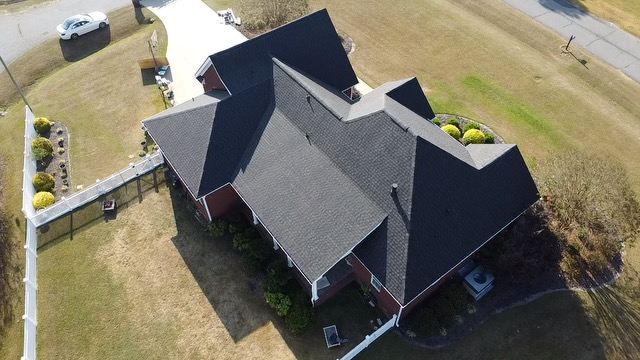
At Skybird, the last step on every job is drone documentation. We photograph the completed roofing system from above — every valley, every flashing detail, every ridge seam — before we pack up. That record matters more than most homeowners realize on day one. When an adjuster visits after a future storm or when you transfer your warranty at the time of sale, that baseline documentation supports your position without a dispute. Most crews finish and leave. Skybird documents what was built. View completed projects in our project gallery.
Red Flags That a Job Was Not Done Right
Most homeowners cannot evaluate installation quality from the ground. These are the specific things worth checking before you sign off on any roof replacement:
Signs that a contractor cut corners:
- No permit pulled. Most municipalities in Wake County and surrounding areas require a permit for a full replacement. A job done without one is unverifiable and can create complications when you sell.
- Old flashing was left in place. Reusing deteriorating step flashing, pipe boots, or valley flashing to save time directly compromises the system’s watertight integrity. Ask to see the old pieces if you are unsure.
- No final walkthrough offered. A contractor who wraps up and leaves before you have had a chance to review the work is a contractor who does not expect what they built to hold up to scrutiny.
- No warranty documentation provided. GAF warranties require contractor registration. If you do not receive a copy of your registered warranty documentation, follow up immediately. Without it, your coverage does not exist in a form you can use.
- Debris and nails left in the yard or gutters. Cleanup is not optional, and skipping it signals how the crew approached the less-visible work throughout the job.
For more on how to evaluate roofing contractors before you hire, the complete roof replacement guide covers what to ask during the estimate process.
Ready to Schedule Your Replacement?
Skybird Roofing handles roof replacement across the Triangle as a GAF Master Elite contractor – a certification held by fewer than 3% of roofing companies in the country – backed by a 25-year workmanship guarantee and drone documentation on every project. Most residential installations are completed in 1 to 2 days.
If you need an honest assessment of your roof or want to know what your replacement will involve, contact the Skybird team at skybirdroofing.net/contact-us/ or call 984-833-1223 to schedule your free inspection.