Commercial Roof Warranties: What Property Owners Must Know
Jump to a section:
Commercial roof warranties are meant to protect one of the largest investments your business owns. The catch is that the warranty most property owners believe they have and the warranty that pays a claim are often two different things. Knowing what your coverage includes, what voids it, and what keeps it in force is the difference between a covered repair and a surprise bill that, on a commercial flat roof, can climb into six figures.
Key takeaways
- Two warranties, two jobs: The manufacturer warranty covers the roofing material, and the contractor’s workmanship warranty covers the installation. You usually need both.
- No Dollar Limit is the top tier: It pays the full cost of a covered repair with no cap, and only manufacturer-certified contractors can offer it.
- A workmanship warranty depends on the contractor: It is worth only as much as that company’s ability to honor it years from now.
- Records decide most claims: Denied claims usually come down to missing maintenance proof, not the roof itself.
- Documentation is your protection: Dated inspection photos show you held up your end of the agreement.
- The right warranty fits your plans: How long you will own the building decides which coverage makes sense, and transferable coverage adds value at sale.
What does a commercial roof warranty cover, and what does it leave to you?
Coverage comes from two places, and each protects against a different kind of failure. The manufacturer warranty covers the roofing material itself. The contractor’s workmanship warranty covers how that material was installed. Mixing up the two is where owners get caught short.
Manufacturer coverage comes in tiers. The base level is a material-only warranty, which comes with the membrane at no extra cost and replaces material that proves defective. It does not pay for the labor to tear off the old roof or install the new material, and on a commercial roofing system that labor is the larger share of the bill. A system or No Dollar Limit warranty sits at the top, covering the full assembly, including the membrane, flashings, and labor, with no cap on what the manufacturer will spend on a covered repair.
The workmanship warranty is separate and comes from the installer. It covers leaks caused by how the roof was put on, such as a poorly welded seam or a flashing detail done wrong. This matters because the strongest manufacturer coverage, the No Dollar Limit tier, is offered only through contractors the manufacturer has trained, certified, and inspected. If a contractor cannot get you one, that tells you something about their standing. The membrane shapes the terms too, since a TPO, EPDM, or modified bitumen system carries different coverage than a metal roof.
All of this assumes the people who installed the roof will still be there to honor their half of the promise, which is the part most owners never think to check.
The coverage you are choosing between
- Material-only warranty: Comes free with the membrane and replaces defective material. You pay the labor and tear-off, the bigger cost on a commercial roof.
- System or No Dollar Limit warranty: Covers the full roofing assembly, labor included, with no cap on covered repair costs. Available only through a certified contractor.
- Contractor workmanship warranty: Covers leaks caused by installation mistakes. Its value rests entirely on the contractor still being in business.
Why is a workmanship warranty only as strong as the contractor who issues it?
A manufacturer warranty is backed by a national company that will be around for decades. A workmanship warranty is backed only by the contractor who signed it. If that company closes, merges, or leaves the area, the paper stays in your file, but there is no longer anyone to call.
This is a real risk in commercial roofing because of how the work often gets sold. After a major storm, out-of-town crews move into the Triangle, install roofs fast, hand over a warranty that reads well, and head to the next market. Two or three years later, when a seam opens up, the phone number is disconnected. The owner pays out of pocket for a repair that should have been covered.
Asking how long a contractor has worked in your area, and whether they will still be servicing it in ten years, is not a minor detail. A workmanship warranty you cannot collect on is worth nothing, no matter how long the term reads. Choosing a contractor with local roots and a real track record is the only way to make that coverage mean something.
“A warranty is a promise, and a promise only counts if the person who made it is still standing there when you need them. We grew up here, our family has been in this part of North Carolina for five generations, and we are not going anywhere. When we put our name on a roof, we plan to be around to back it up.” Jacob Vollmer, owner of Skybird Roofing
Picking a contractor who will honor the warranty is the first half. The second half is knowing what can quietly cancel your coverage before you ever file a claim.
Questions that reveal whether a workmanship warranty will hold up
- How long in this market: A contractor with years of local history is far more likely to be reachable when you need a repair.
- Certified by the manufacturer: Certification means the crew met training and quality standards and can issue the stronger warranties.
- Who answers the claim: Confirm the same company services the warranty, not a subcontractor who has since moved on.
What voids a commercial roof warranty in the North Carolina climate?
Most warranty denials are not the manufacturer being difficult. They happen because the owner triggered one of the exclusions written into every warranty. Knowing those ahead of time is how you keep your coverage intact.
Standing water is the trigger we see most on flat commercial roofs here. Triangle summers bring heavy, fast thunderstorms, and a roof that does not clear within a day or two starts to pond. Most warranties exclude damage from water that sits past a set number of hours, which makes proper drainage a condition of staying covered rather than a maintenance afterthought.
The second common trigger is other people working on your roof. When an HVAC technician sets equipment on the membrane, or a telecom crew runs a new line through it, those penetrations count as damage caused by others, and the manufacturer will not cover the leak that follows. Hiring an uncertified handyman to patch a problem can void coverage the same way.
The protection is a simple rule: no one touches the roof unless your roofing contractor knows about it first. Skip that step, and a repair that should have been covered can turn into a replacement you pay for yourself.
“We tell every commercial client the same thing. Before anyone goes up on that roof, an HVAC tech, a solar installer, anyone at all, call us first. A single unauthorized penetration can cost you a warranty worth far more than the repair ever would have been.” the team at Skybird Roofing
Avoiding the exclusions keeps your warranty alive. Proving you avoided them is what gets a claim paid.
The exclusions that catch commercial owners most often
- Ponding water: Coverage often ends where water sits longer than the warranty allows, so drainage problems are a warranty risk, not just a nuisance.
- Third-party penetrations: Holes or damage from HVAC, solar, or telecom work are treated as damage caused by others.
- Unauthorized repairs: A patch by an uncertified contractor can void coverage on the entire system.
- Severe weather: Hail and high wind usually fall under your property insurance, not the roof warranty.
How do documented inspections decide whether your claim gets paid?
Here is the part of warranty coverage almost no one plans for. When you file a claim years into the warranty, the manufacturer asks for proof that you maintained the roof the way the warranty required. Owners who cannot produce that record get turned down, even when the failure looks like a clear defect.
We have watched the situation play out. A roof develops a problem eight or nine years into a twenty-year warranty, the owner files, and the claim is rejected because there are no maintenance records. The manufacturer’s reasoning is hard to argue with. Without documentation, they cannot tell a true defect apart from years of neglect.
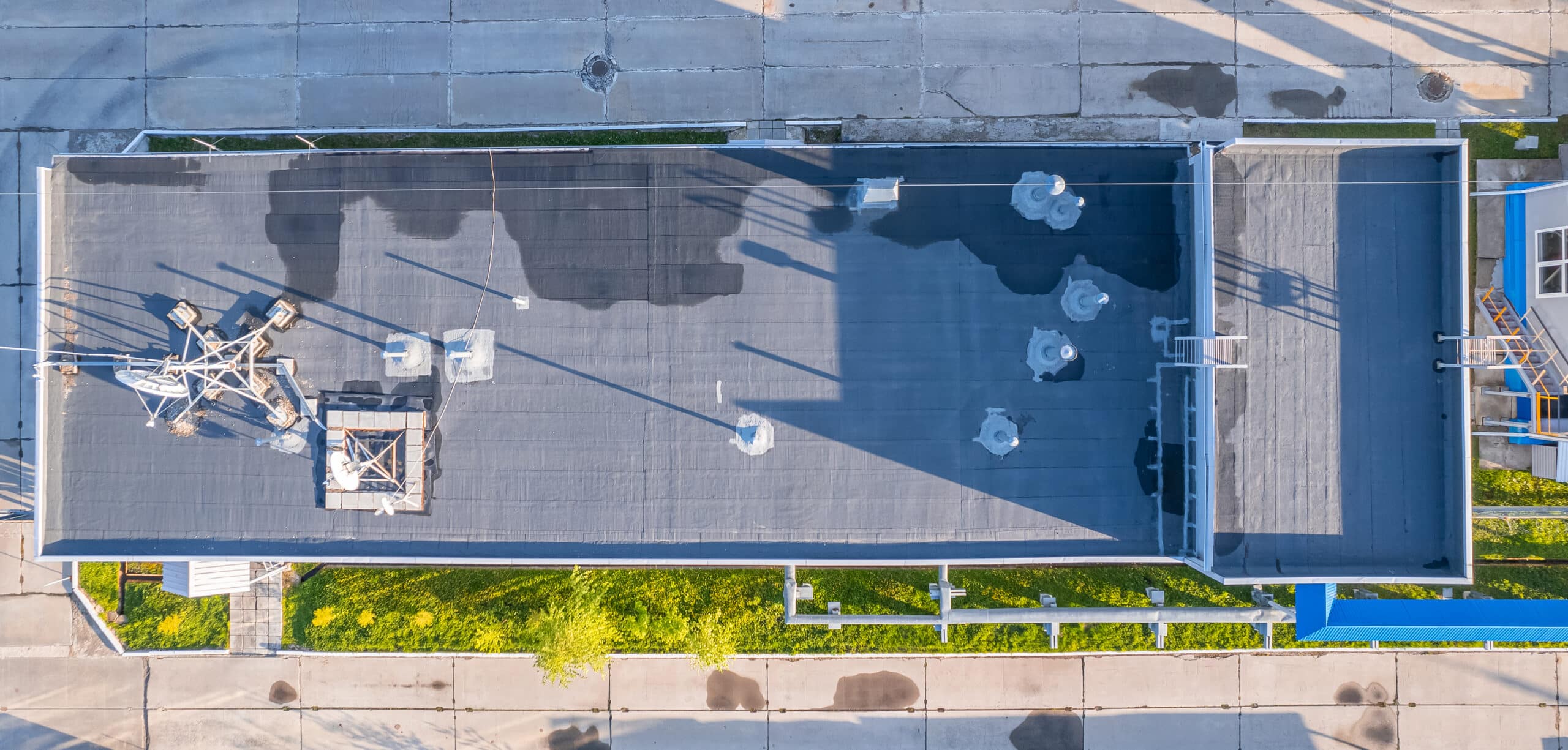
This is where regular, documented inspections pay for themselves. A commercial roof inspection that produces dated photos of the roof’s condition builds the exact paper trail a manufacturer wants to see. We use drone documentation on commercial roofs, which captures the full surface from above and time-stamps it, so you have a clear, year-by-year history if the day comes to file.
Some manufacturers will even extend your warranty term when you keep up a documented maintenance program. The risk runs the other way too: skip the records, and the strongest warranty on the market can come to nothing the moment you need it.
“The best warranty in the world will not help you if you cannot prove you took care of the roof. The dated inspection reports we hand our commercial clients are more than paperwork. They are the evidence that gets a claim paid years down the road.” the team at Skybird Roofing
Once you know what keeps a warranty in force, the last question is which level of coverage is the right one to buy.
What a documented inspection record should capture
- Dated photos: Time-stamped images of the membrane, seams, and flashings show condition over time.
- Drainage and ponding checks: Evidence that water clears the roof keeps the most common exclusion off the table.
- Repairs and penetrations logged: A record of who worked on the roof, and when, protects you if a third party causes damage.
Which warranty fits how long you plan to own the building?
The common advice is to always buy the longest, strongest warranty available. We take a more honest view. The right coverage depends on how long you intend to hold the property and what you plan to do with it.
If you own the building and plan to keep it for decades, a No Dollar Limit warranty for the full term is worth the added cost. You are protecting yourself against repair bills you would otherwise carry for the entire life of the roof, and the price of the upgrade is small next to a six-figure roofing investment.
If you expect to sell within a few years, the math shifts toward transferability. A warranty that transfers to the next owner becomes a selling point. A roof with ten years of transferable No Dollar Limit coverage left on it is a line item a buyer’s team will value during the sale, and it can shorten negotiations. Confirm the transfer terms first, since some warranties charge a fee or require the new owner to keep up the maintenance agreement.
If you bought a building with a roof already in place, find out what coverage exists and whether it transferred correctly. Plenty of owners assume they are protected and learn during a claim that the warranty lapsed at the sale. A roof inspection tells you the roof’s age and condition, and the paperwork tells you whether you are covered. Metal roofing systems often carry their own longer warranty terms, worth checking if that is what you inherited.
“We would rather sell you the coverage that fits your plan than the most expensive option on the shelf. If you are selling in five years, transferable coverage may serve you better than the longest term. That is the kind of straight answer we would want if the roof were ours.” Jacob Vollmer, owner of Skybird Roofing
Matching the warranty to your situation
- Long-term hold: A full-term No Dollar Limit warranty protects against repair costs across the roof’s whole life.
- Planning to sell: Transferable coverage adds value at closing and can speed up the deal.
- Inherited roof: Verify the existing warranty transferred correctly before you rely on it.
How Skybird Roofing helps protect your commercial roof
A commercial roof warranty is only as good as the contractor behind it and the records that keep it in force. Our team helps Triangle-area businesses choose coverage that fits their plans, install it to the standard the strongest warranties require, and document the roof so a claim holds up when it counts. As a GAF Master Elite contractor, a standing fewer than 3% of roofing companies nationwide hold, we install to the manufacturer specifications that make the better warranties possible, and we give you straight answers about what your coverage will and will not do.
If you want a clear picture of your commercial roofing and the protection behind it, schedule a free roof inspection. Call us at 984-833-1223 or reach out through our contact page, and we will tell you exactly where your roof and your coverage stand.